New Omdia Analysis Shows Agentic AI Outpacing Growth Rates of Traditional Generative AI
New Omdia Analysis Shows Agentic AI Outpacing Growth Rates of Traditional Generative AI

LONDON--(BUSINESS WIRE)--The enterprise agentic AI software market is set to surge from $1.5 billion in 2025 to $41.8 billion by 2030, according to Omdia’s latest Enterprise Agentic AI Software Market Forecast. This represents one of the fastest-growing segments in enterprise technology.
"The agentic AI market is evolving rapidly as enterprises prioritize automation capabilities," said Neil Dunay, Principal Forecaster at Omdia.
Share
The analysis shows agentic AI is significantly outperforming traditional generative AI at similar market stages. While generative AI's initial 5-year CAGR (2022-2027) is projected at 90%, agentic AI's forecast 5-year CAGR (2024-2029) reaches an impressive 175%. This accelerated adoption is driven by enterprise priorities for automation, with 39% of early adopters citing reduced costs and increased employee productivity as primary motivations for deployment. Importantly, previous generative AI infrastructure investments have paved the way for an easier market entry and quicker development for agentic AI, offering organizations the potential to achieve faster returns on investment.
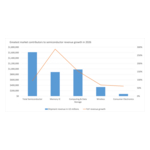
"The agentic AI market is evolving rapidly as enterprises prioritize automation capabilities," said Neil Dunay, Principal Forecaster at Omdia. "By 2030, agentic AI will represent 31% of the total generative AI market, up from just 6% in 2025." The forecast identifies automated code development as the largest use case, projected to reach $8.2 billion by 2030, followed closely by virtual assistants (e.g., customer self-support agents) at $7.7 billion.
Omdia's complete forecast provides detailed breakdowns by vertical industry, geographic region, workload type, and use case, along with strategic insights to guide investment decisions in this rapidly evolving landscape.
ABOUT OMDIA
Omdia, part of Informa TechTarget, Inc. (Nasdaq: TTGT), is a technology research and advisory group. Our deep knowledge of tech markets grounded in real conversations with industry leaders and hundreds of thousands of data points, make our market intelligence our clients’ strategic advantage. From R&D to ROI, we identify the greatest opportunities and move the industry forward.
Contacts
Fasiha Khan: fasiha.khan@omdia.com