FMI Report: Amid Uncertainty, Food Industry Succeeds in Offering Shoppers Value
FMI Report: Amid Uncertainty, Food Industry Succeeds in Offering Shoppers Value
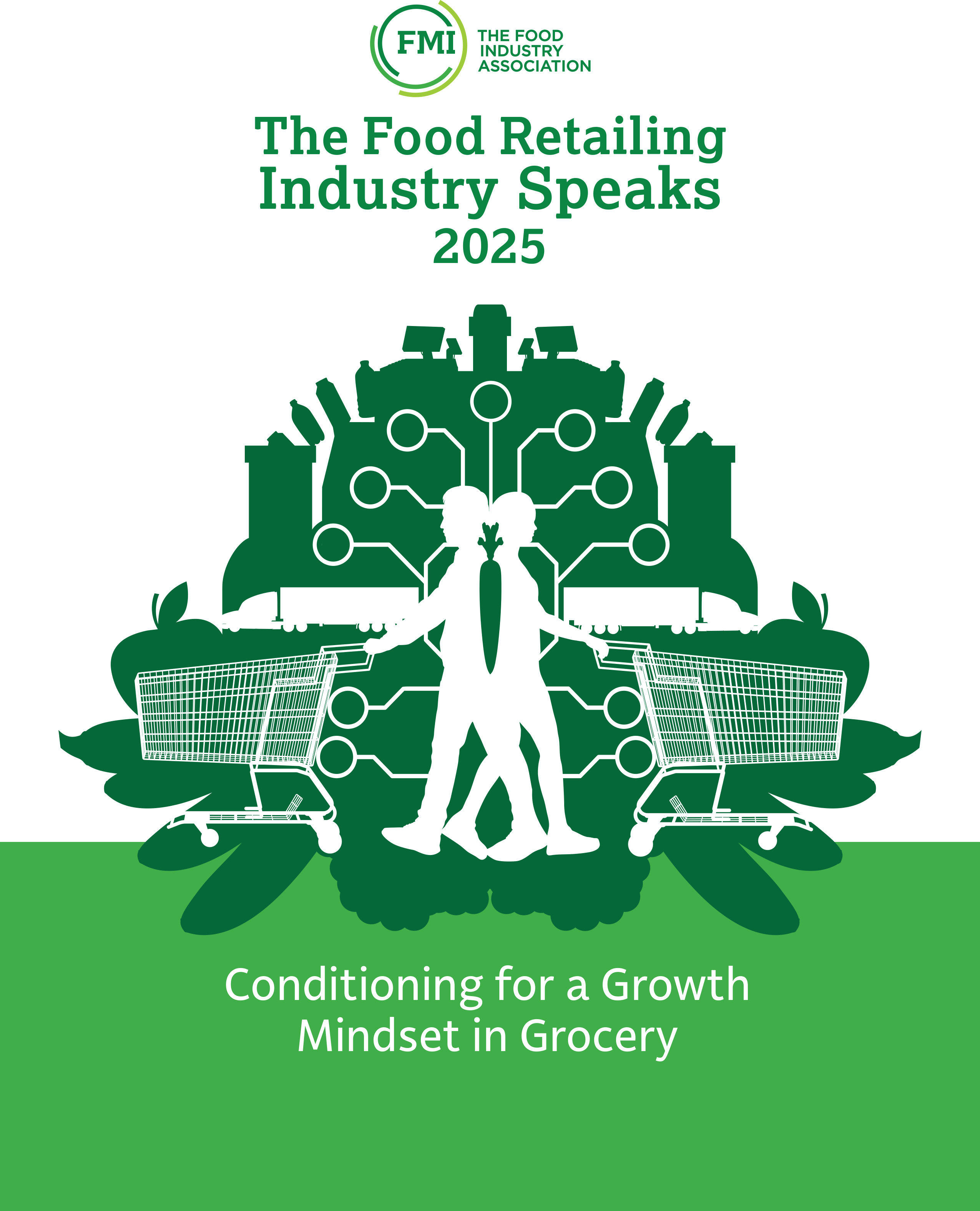
ARLINGTON, Va.--(BUSINESS WIRE)--Today, FMI – The Food Industry Association, releases its signature research, The Food Retailing Industry Speaks 2025, which reveals how the industry is evolving into a modern grocery experience while navigating a complex operating environment. The analysis highlights successful strategies across the sector and offers a deeper exploration of how food retailers and suppliers are adapting their businesses.
Our industry, long accustomed to operating on narrow margins, is once again feeling economically squeezed, with food retail profit margins settling at 1.7%, while food product suppliers reported a net income of 7.7%, consistent with 2023 figures.
Share
The food industry continues to face a challenging macroeconomic situation. Approximately 80% of both retailers and suppliers anticipate that trade policies and tariffs will continue to impact pricing and disrupt supply chains. Additionally, most expect operating costs to remain elevated.
FMI President and CEO Leslie G. Sarasin reflected on the annual report, saying, “Our industry, long accustomed to operating on narrow margins, is once again feeling economically squeezed, with food retail profit margins settling at 1.7%, while food product suppliers reported a net income of 7.7%, consistent with 2023 figures.
“These performance pressures remain persistent, and the outlook presented in our recent analysis highlights a broader trend – a sharp rise in costs associated with regulatory actions at the federal and state levels and their impact on the food industry in recent years. As regulatory burdens and complexity continue to grow, our industry braces for even greater costs ahead. With more than half of suppliers and over one-third of retailers expecting increased compliance expenses in 2025, we are focused on advocating for changes to these policies and on providing tools to our members to help reduce the compliance burden.”
Despite these hurdles, retailers and suppliers reported significant progress in workforce stability last year due to continued efforts to boost employment incentive offerings. The share of retailers citing recruitment and retention challenges dropped dramatically from 85% in 2022 to just 52% in 2024. Suppliers witnessed an even steeper decline in recruitment and retention challenges, falling from 65% to 28% over the same period. This positive shift reflects substantial investments in talent development across the food industry, specific to enhanced wages, expanded benefits, performance bonuses, and robust training programs that have contributed to a notable reduction in employee turnover – falling to 48% in 2024 from a historic high of 65% in 2022. It is unclear how the current immigration and deportation policy changes will impact these numbers in 2025.
Nearly 50% of food retailers and suppliers note the positive impact of consumers leveraging food to manage or avoid health issues, and most are offering products with beneficial nutrition attributes for health and well-being. While shoppers remain concerned about food prices, FMI’s recent consumer trends research found customers are willing to invest in key needs related to “eating well,” including health, entertainment, exploration and convenience.
“While being sensitive to the budgets of consumers, our members are reimagining the grocery store as a destination and one that reflects how today’s shoppers want to live and eat,” Sarasin said. “From expanded fresh offerings and wellness hubs to foodservice solutions and seamless omnichannel experiences, they are focused on delivering quality, personalization and loyalty-driven value at every touchpoint.”
For Media:
Members of the media may contact FMI for a gratis copy of The Food Retailing Industry Speaks 2025 report.
To access online charts, visit www.FMI.org/GrocerySpeaks.
About FMI
As The Food Industry Association, FMI works with and on behalf of the entire industry to advance a safer, healthier, and more efficient consumer food supply chain. FMI brings together a wide range of members across the value chain — from retailers to producers to companies supplying critical services — to amplify the collective work of the industry. www.FMI.org
Contacts
Heather Garlich, media@fmi.org, 703-209-1829