Feinstein Institutes Research Reveals Link Between Five Senses and Immune System
Feinstein Institutes Research Reveals Link Between Five Senses and Immune System
MANHASSET, N.Y.--(BUSINESS WIRE)--New research from Northwell Health’s Feinstein Institutes for Medical Research suggests the relationship between the five senses and immune system plays a larger role in protecting humans from disease than previously thought.
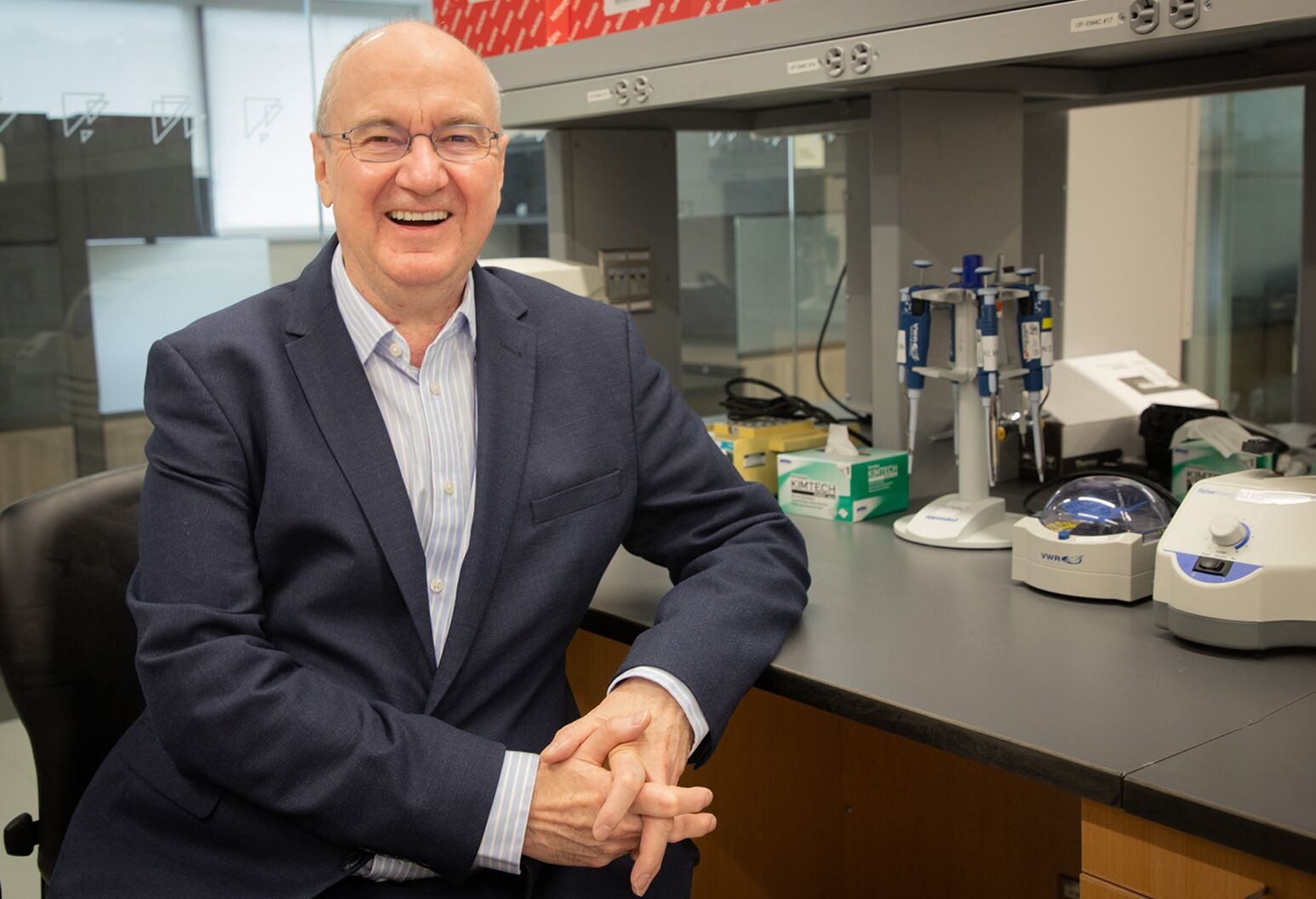
The research, published recently by Trends in Immunology and led by Douglas F. Nixon, MD, PhD, director of the Feinstein Institutes’ Institute of Translational Research, shows the five senses – sight, smell, taste, touch and sound – do more than just help with experiencing the world; they also play a key role in the immune system. Scientists call this “shared immunity,” and it means that the body can communicate and share immune benefits with others, even across generations. For example, sensing danger through smell could trigger the immune system and even prepare a child’s immune systems for similar threats. This expands science’s understanding of immunity beyond just individual defenses to a more interconnected system of protection within communities and families.
“This paper offers a fresh perspective on immunity by exploring the five senses,” said Dr. Nixon, corresponding author of the paper and the Karches Family Professor in Translational Research. “Through this research, we have revealed a new way to think about boosting immunity, finding that organisms can use sensory information to protect themselves and those nearby which can ultimately lead to the discovery of new treatments.”
Dr. Nixon and his team highlighted examples of how each sense modulates immunity:
- Smell acts as an early warning system, detecting airborne signals from pathogens and triggering immune responses that can even be inherited by offspring.
- Specific sound waves have been shown to activate immune cells in animals, potentially offering new therapeutic avenues for humans.
- Taste helps insects detect and prepare for bacterial threats.
- Touch facilitates the exchange of beneficial microbes on the skin and bacteria can modulate immune responses.
- While still under investigation, sight might help avoid contact with or exposure to disease-causing agents.
This research significantly expands the understanding of the complex interplay between the senses, the immune system and the environment though genetics and generational evolution. The findings offer potential new directions for future research and the development of innovative therapeutic strategies to enhance immune defenses.
“Dr. Nixon’s proposes a new model of immunity, based on the five senses contributing to a complex web of environmental inputs,” Kevin J. Tracey, MD, president and CEO of the Feinstein Institutes and Karches Family Distinguished Chair in Medical Research. “These concepts of shared immunity suggest new testable hypotheses that may encourage the development of novel therapies.”
Dr. Nixon recently published findings that human endogenous retroviruses (HERVs), a subset of transposable elements (TEs) found in genomic dark matter, may play a crucial role in explaining how this group can naturally suppress the human immunodeficiency virus (HIV), potentially leading to new avenues for HIV treatments.
About the Feinstein Institutes
The Feinstein Institutes for Medical Research is the home of the research institutes of Northwell Health, the largest health care provider and private employer in New York State. Encompassing 50+ research labs, 3,000 clinical research studies and 5,000 researchers and staff, the Feinstein Institutes raises the standard of medical innovation through its six institutes of behavioral science, bioelectronic medicine, cancer, health system science, molecular medicine, and translational research. We are the global scientific leader in bioelectronic medicine – an innovative field of science that has the potential to revolutionize medicine. The Feinstein Institutes publishes two open-access, international peer-reviewed journals Molecular Medicine and Bioelectronic Medicine. Through the Elmezzi Graduate School of Molecular Medicine, we offer an accelerated PhD program. For more information about how we produce knowledge to cure disease, visit http://feinstein.northwell.edu and follow us on LinkedIn.
Contacts
Julianne Mosher Allen
516-880-4824
jmosherallen@northwell.edu