72% of Training and L&D Professionals Cite Learner Engagement as Top Virtual Training Obstacle Despite Global Adoption
72% of Training and L&D Professionals Cite Learner Engagement as Top Virtual Training Obstacle Despite Global Adoption
New Research from Class, Microsoft, and Training Magazine Explores Ways to Improve the Learner Engagement Dilemma as Virtual Training Investments and Innovations Rise
WASHINGTON--(BUSINESS WIRE)--Class Technologies Inc., a global leader in virtual classrooms, today announced the findings of a new research study conducted in collaboration with Microsoft and Training magazine, “The Virtual Training Paradox: High Confidence, Low Engagement—What Will It Take to Keep Learners Engaged?”
The 2025 research report includes the perspectives of 661 learning and development (L&D) and training professionals about the current practices and key challenges in virtual training and virtual instructor-led training (VILT).
“This study confirms what training and L&D leaders have been saying for years—virtual training is mission-critical, but we still haven’t figured out the challenge of engagement,” said Lorri Freifeld, Editor/Publisher of Training magazine. “It’s incumbent upon our community to deliver engaging solutions. The research and best practices uncovered with Class and Microsoft aim to do just that.”
Key findings from the report include:
- VILT is here to stay and widely adopted by nearly all surveyed, with 73% of organizations relying on Microsoft Teams for VILT, and 52% using Zoom.
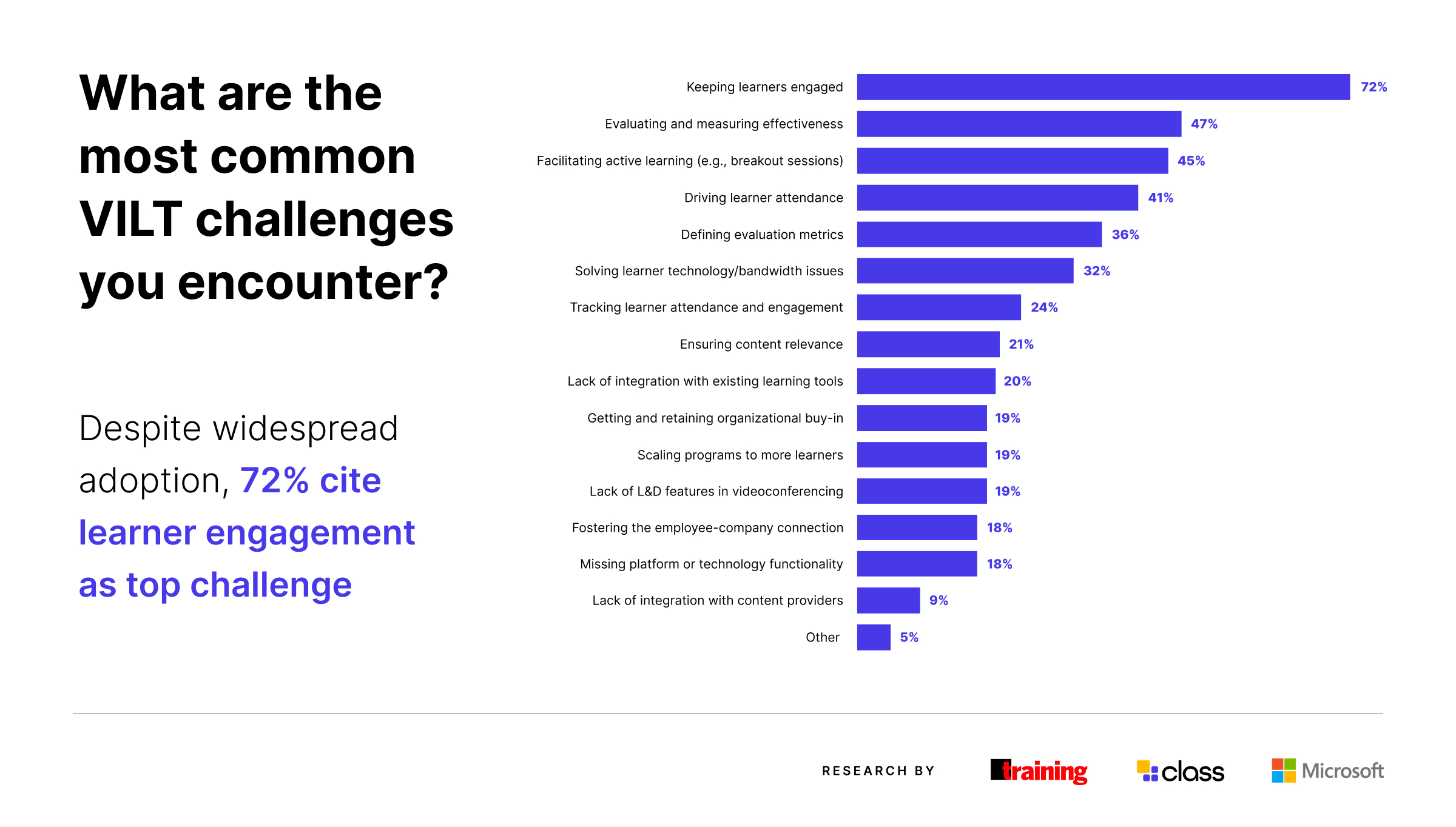
- Despite widespread adoption, many (72%) cite learner engagement as their top VILT challenge—revealing a gap between implementation and impact. This represents an opportunity to rethink how to deliver effective training experiences.
- The desired enhancements for video conferencing to improve VILT delivery include assessments (41%), engagement analytics (40%), enhanced breakout rooms (39%), and tools to monitor participation (37%).
- Best practices from practitioners underscore the need for more dynamic, personalized, and interactive VILT platforms and virtual classrooms.
Best practices for VILT:
To maximize learner engagement in VILT, the study identified four key best practices. First, understanding learners' needs ensures training is relevant and engaging. Second, making sessions interactive through hands-on activities, multiple speakers, and real-time collaboration improves retention. Third, measuring engagement in real time allows instructors to adjust for better learning outcomes. Finally, using a purpose-built virtual classroom rather than standard video conferencing creates a more engaging and effective learning experience.
“The study’s findings align closely with our vision for creating more engaging virtual training experiences for learners and facilitators,” said Michael Chasen, Co-Founder and CEO of Class. “The future of virtual classroom products and improvements required for VILT will now be guided by this new research and needs of the L&D, training, and human resources professionals we partner with.”
“As organizations continue to embrace hybrid and remote work, the need for effective virtual learning has never been greater,” said Paige Johnson, Vice President Public Sector, Financial Services and Media of Microsoft. “At Microsoft, we’re committed to empowering learning and development leaders with better solutions and technology, including Class for Microsoft Teams, to help address these opportunities.”
Download the full report at class.com/virtual-training-report.
Survey Methodology
The study, “The Virtual Training Paradox: High Confidence, Low Engagement—What Will It Take to Keep Learners Engaged?”, was conducted by Training magazine, Class, and Microsoft in October/November 2024. The survey polled 661 L&D, human resources, and business professionals on their VILT programs, the challenges and successes they have experienced, and their top priorities for training, learning, and development. Several individuals were interviewed for further study.
About Class Technologies, Inc.
Class is the virtual classroom for learning and development—built upon the audio and video capabilities of Zoom and Microsoft Teams. Developed by Class Technologies Inc., the company enables the active learning of 10M+ users from 1,500+ businesses and schools and is the largest provider of virtual classroom software globally. For more information and to schedule a demo, visit class.com, and follow them on LinkedIn at @WeAreClassTech.
Contacts
Class Media Contact
Jordan Slade
MSR Communications for Class
press@class.com
(757) 876-5809