Teledyne’s Visible and Infrared Detectors are the “Eyes” of ESA’s Euclid Dark Universe Space Mission
Teledyne’s Visible and Infrared Detectors are the “Eyes” of ESA’s Euclid Dark Universe Space Mission
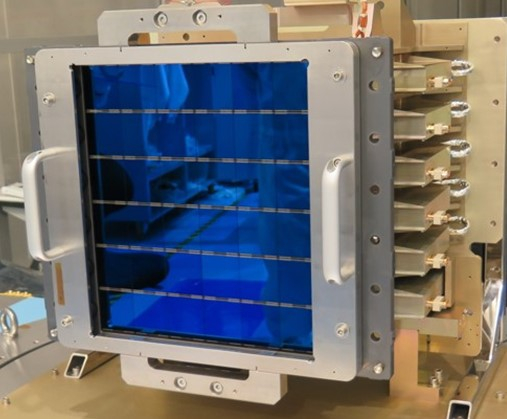
THOUSAND OAKS, Calif.--(BUSINESS WIRE)--On Saturday, July 1, the European Space Agency (ESA) is scheduled to launch the Euclid Dark Universe space astrophysics mission from Cape Canaveral, Florida. Euclid will explore the evolution of the dark Universe, constructing a three-dimensional map of the Universe by observing billions of galaxies out to 10 billion light-years. While dark energy accelerates the expansion of the Universe and dark matter governs the growth of cosmic structures, scientists do not know what dark energy and dark matter are. By observing how the Universe evolved over the past 10 billion years, astronomers can infer the properties of dark matter and dark energy to reveal more about their precise nature.
Euclid has a 1.2-meter diameter telescope that is designed to work at both visible and near-infrared wavelengths. The telescope will collect light from distant cosmic objects and feed the light to two scientific instruments: a visible wavelength camera (VIS) and a near-infrared spectrometer and photometer (NISP). The two instruments work in parallel and observe the same region of the sky during each exposure. Each instrument has a field of view of 0.56 degree – about 2.8 times larger than the full moon, enabling Euclid to measure more than a third of the sky during its planned six year mission. Teledyne e2v Space Imaging and Teledyne Imaging Sensors, business units of Teledyne Technologies Incorporated (NYSE:TDY), provided the visible and infrared detectors that compose the focal plane mosaics.
Euclid’s VIS focal plane is composed of 36 Charge Coupled Devices (CCDs), each with 4,096×4,096 pixels, for a total of approximately 604 million pixels. The CCDs were produced by Teledyne e2v Space Imaging in Chelmsford, England.
The Euclid NISP instrument was delivered by an international consortium coordinated by France, with partners from Italy, Germany, Spain, Denmark, Norway, and the United States. Euclid’s NISP focal plane is composed of 16 H2RG infrared arrays, each with 2,048×2,048 pixels, for a total of more than 67 million pixels. When Euclid launches, NISP will be the largest infrared focal plane mosaic operating in space. The H2RGs were produced by Teledyne Imaging Sensors in Camarillo, California. Teledyne Imaging Sensors also produced the SIDECAR ASIC, an application specific CMOS chip that operates Euclid’s H2RG arrays and digitizes the image data.
“Teledyne is very proud to provide the high performance detectors to the Euclid dark universe mission,” said Dr. James Beletic, President of Teledyne Imaging Sensors. “We are honored to contribute to this important mission that will advance our understanding of the Universe.”
About Teledyne Technologies
Teledyne Technologies is a leading provider of sophisticated digital imaging products and software, instrumentation, aerospace and defense electronics, and engineered systems. Teledyne Technologies’ operations are primarily located in the United States, Canada, the United Kingdom, and Western and Northern Europe. For more information, visit Teledyne Technologies’ website at www.teledyne.com.
Contacts
Dr. James Beletic
(805) 231-8267