New Report from BluesightⓇ Sheds Light on U.S. Consumer Trust in Healthcare and Pharmaceutical Management
New Report from BluesightⓇ Sheds Light on U.S. Consumer Trust in Healthcare and Pharmaceutical Management
Survey of over 1,000 U.S. adults revealed 60.2% would switch hospitals if there was detected drug diversion within their health system
ALEXANDRIA, Va.--(BUSINESS WIRE)--BluesightⓇ, The Medication Intelligence™ Company, today published the results of a recent survey measuring U.S. consumers’ trust in the U.S. healthcare system and pharmaceutical industry, which revealed that trust in both is below average. The study also explored how prior knowledge about drug diversion – among other factors – may impact patient perception and decisions about where to seek care.
“Through our suite of software solutions, Bluesight aims to provide actionable analytics by breaking down the barriers of siloed data within hospitals,” said Kevin MacDonald, CEO and co-founder of Bluesight. “At the end of the day, patient safety and their perspectives are what matters to hospitals. This survey brings the voice of the patient to life by highlighting key factors that influence their decision in choosing their healthcare providers. Topics like drug diversion are not always easy, but they are important to ensuring the safety and security of patients.”
About half of respondents (49.68%) are already aware of how significant the issue of drug diversion is, and one-fifth (21.79%) recalled hearing about an instance at their own local hospital. The survey dug deeper into the issue of drug diversion by exploring patients’ views of healthcare in general, as well as the specific factors that increase trust, drive them to select certain facilities, and inform their understanding of their safety and the quality of care they receive.
Key findings from the survey include:
- U.S. consumers believe healthcare systems need improvement, ranking it on average a 4.98 out of 10. Trust in pharmaceutical companies also has a long way to go, with 45.43% of respondents reporting that they do not trust them. There is an opportunity to educate the general public around healthcare costs and digital technologies to improve their understanding of the healthcare system and how these factors impact them.
- Not only does drug diversion affect hospitals internally, but it also affects a majority of patients’ decisions in where to seek care, which ultimately affects hospitals’ bottom line. Two-thirds of respondents (66.02%) said their perceptions of a hospital would be negatively affected to some degree if they learned about drug diversion taking place at that hospital, and six out of 10 respondents (60.2%) would be driven to seek medical care at alternative hospitals.
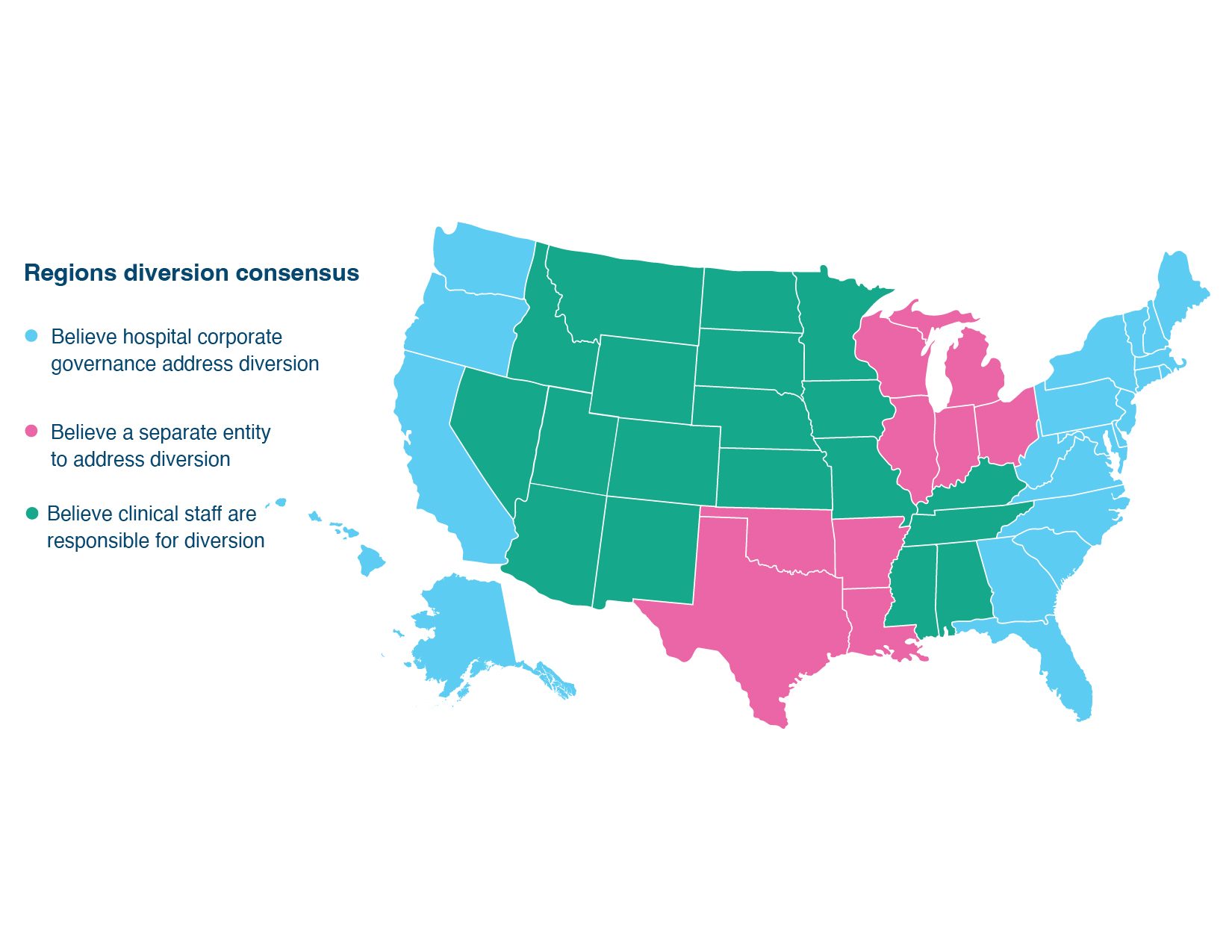
- Consumers want healthcare systems and hospitals to take more responsibility and control over potential drug diversion taking place in their own organizations. Nearly 80% of respondents (78.22%) believe that someone within hospitals should be responsible for addressing diversion, whether that be the hospital’s governance (29.09%), clinical staff such as nurses or pharmacists (23.55%), or a separate entity within the hospital specifically tasked with addressing diversion (25.58%).
- With regard to surprising cost levels, hospitals must remain aware of drug prices for their patients and do their best to help control them, whether that means identifying opportunities to switch to a generic drug or receiving information directly from wholesalers to help inform purchasing decisions, thus better ensuring patients can follow through with treatment plans. More than two-fifths of respondents (42.94%) believe that hospitals need to make decreasing costs a primary focus of improving the patient experience.
Quality of care and trust in a healthcare facility are paramount: over half of consumers consider the quality of facilities as the most important factor when choosing a hospital for treatment, while only 30% value location or proximity to their home as the most important. Further, pharmaceutical companies and healthcare facilities are inevitably connected, so it is imperative that hospitals and health systems consider how consumers’ relationships with the pharmaceutical industry may be affecting patients’ perception of them.
Bluesight’s Patient Perspectives: U.S. Trust in Pharmaceutical Management within Healthcare Systems survey was distributed to U.S. consumers over the age of 18. A total of 1,083 responses were collected in October 2022. The survey was commissioned by Bluesight and conducted via SurveyMonkey, and consisted of 18 multiple choice questions.
To access the full report, visit https://bluesight.com/resource/patient-perspectives-us-trust-in-pharmaceutical-management-within-healthcare-systems/.
About Bluesight
Bluesight solves supply chain inefficiencies and reduces risk by providing actionable analytics for every step of the medication lifecycle. Through our suite of Medication Intelligence™ solutions, Bluesight brings simplicity, visibility, and predictability to the complex world of medication management. To date, more than 1,000 U.S. and Canadian hospitals utilize Bluesight solutions to optimize their hospital’s efficiency. Bluesight focuses on providing comprehensive, item-level data that empowers providers to make informed, accurate decisions. These solutions include RFID-enabled inventory management, controlled substance diversion prevention software and medication purchasing optimization. To learn more about Bluesight’s suite of Medication Intelligence solutions, visit us at bluesight.com.
Contacts
Hannah Fier
Matter Health for Bluesight
bluesight@matternow.com