Recovering from the Great Resignation: 12 Sustainable Solutions for Organizations
Recovering from the Great Resignation: 12 Sustainable Solutions for Organizations
Free resource from ISACA now available
SCHAUMBURG, Ill.--(BUSINESS WIRE)--Recent workforce studies across the world highlight a considerable shift in employees’ attitudes toward work brought about by the COVID-19 pandemic—including the hotly debated “quiet quitting” trend. ISACA’s new white paper, The Great Resignation: Business Challenges and Sustainable Solutions, discusses the reasons for the Great Resignation, the difficulties it creates for enterprises, and recommendations for developing a sustainable, multipurpose workforce-management solution.
In the wake of the COVID-19 pandemic, increasing turnover is a global concern and a major risk to the sustainability and resilience of many enterprises worldwide. Enterprises must take immediate actions to become flexible with responses to employee demands, allowing more flexibility for working from home and balance between work and life commitments when coming back to work after the pandemic.
ISACA’s white paper delves into the components of operational resilience and different types of risk that the Great Resignation introduced, including productivity loss, poor customer service, as well as reputational and information risk. When addressing the challenges caused by the Great Resignation, the white paper suggests keeping the following in mind:
- Adaptability is essential: It is hard to predict exactly the skills that will be needed even five years from now, so workers and organizations need to be ready to adapt to any of the worlds envisaged.
- Focus on employee value: The risk of losing critical people to burnout or early retirement will be a constant concern; organizations need to pay careful attention to the employee value proposition.
- Adopt a phased approach to solutions: Although problems caused by the Great Resignation are pressing, they should be solved using a phased approach to avoid sudden changes overwhelming staff.
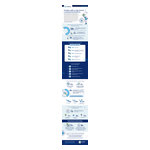
ISACA’s paper shares several sustainable solutions to workforce issues, including:
- Strengthen innovation, creativity, empathy and leadership capabilities in the business alongside critical technology skills.
- Build and nurture adaptability in the enterprise workforce by harnessing a flexible talent mix, new ways of working and learning, and providing radically different career paths.
- Build a future-looking understanding of how humans and machines can collaborate to deliver the enterprise’s purpose.
To download a complimentary copy of The Great Resignation: Business Challenges and Sustainable Solutions white paper, visit www.isaca.org/it-great-resignation. Additional resources from ISACA can be found at www.isaca.org/resources and www.isaca.org/digital-trust.
About ISACA
ISACA® (www.isaca.org) is a global community advancing individuals and organizations in their pursuit of digital trust. For more than 50 years, ISACA has equipped individuals and enterprises with the knowledge, credentials, education, training and community to progress their careers, transform their organizations, and build a more trusted and ethical digital world. ISACA has more than 165,000 members in 188 countries, including 225 chapters worldwide. Through its foundation One In Tech, ISACA supports IT education and career pathways for underresourced and underrepresented populations.
Contacts
Bridget Drufke, bdrufke@isaca.org, +1.847.660.5554
Kristen Kessinger, communications@isaca.org, +1.847.660.5512