Large-Scale COVID-19 Antibody Testing of Frontline Health Care Workers Reveals Prevalence
Large-Scale COVID-19 Antibody Testing of Frontline Health Care Workers Reveals Prevalence
Northwell Health employee COVID-19 serology tests shows more than 13 percent of health care providers tested positive for antibodies
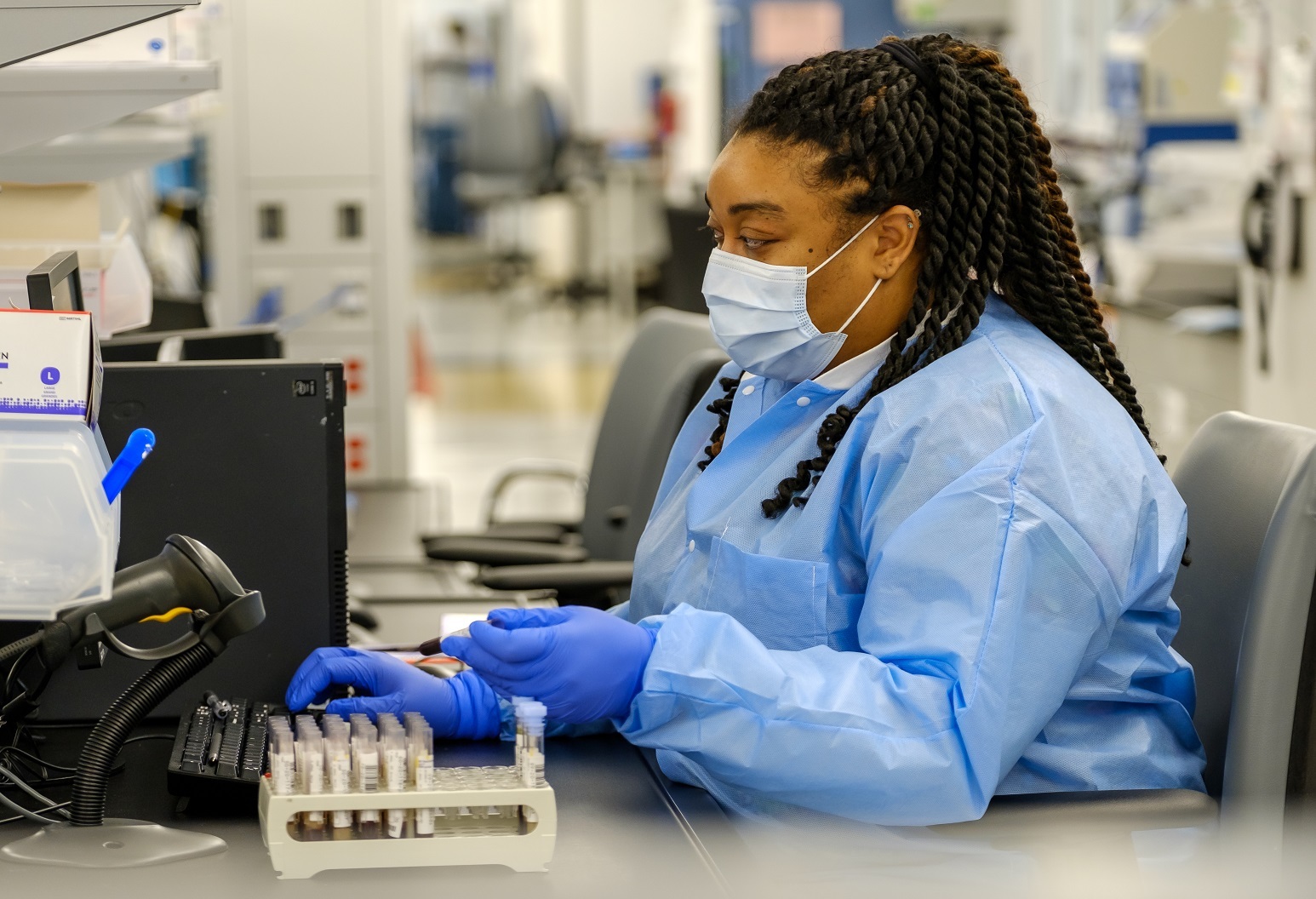
MANHASSET, N.Y.--(BUSINESS WIRE)--The first sizeable, systematic testing of American health care workers’ serology shows that Northwell Health, the largest health system in New York, kept its staff safe during the coronavirus disease 2019 (COVID-19) pandemic. This data, published today in The Journal of Medical Association (JAMA), demonstrates that health care providers knew when they were infected, and that should inform a new guideline for health care worker testing.
Northwell Health offered free antibody testing to its 72,000 employees. More than half of Northwell Health employees were tested for severe acute respiratory syndrome coronavirus 2 (SARS-CoV-2) antibodies. Northwell’s research arm, the Feinstein Institutes for Medical Research and its Northwell Health COVID-19 Research Consortium (CRC), reported the results of the testing for health care providers (HCPs) from April 20 to June 23. Of the final consented sample of HCPs (40,329), 13 percent (5,523) tested positive for antibodies. The positive sample pool included 28.4 percent (11,468) nurses and 9.3 percent (3,746) physicians.
The results compare to a recent New York State antibody screenings study which revealed 12.3 percent of the general population had antibodies. Another report from Governor Andrew Cuomo’s office showed 10.5 percent of the NYPD and 17.1 percent of FDNY/EMT members tested positive for antibodies.
“To help keep our health care workers who were on the COVID-19 pandemic frontlines, their patients and loved ones safe and informed, we rolled out free antibody screening across our 23-hospitals,” said Karina W. Davidson, PhD, MASc, professor and senior vice president at the Feinstein Institutes. “As researchers, it’s important to us to share findings from our antibody testing, and we are pleased to know that the personal protective equipment we used was successful in protecting the vast majority of our staff.”
The data was analyzed for seroprevalence status, the occurrence of a disease as measured by SARS-CoV-2 IgG presence in a blood sample. Health care personnel reported their demographics, work location, and their level of suspicion of virus exposure; 73.7 (29,725) percent were women, 16 percent (6,444) were African American, and 14 percent (5,653) were Hispanic HCPs. High levels of HCP-reported suspicion of virus exposure and prior positive diagnostic testing were better indicators of positive results.
“We are proud to have offered our 72,000 team members an opportunity to get antibody testing,” said Joe Moscola, Northwell’s chief people officer and head of human resources. “And we are even prouder to have undergone this research effort to identify best practices for keeping front line personnel in our hospitals and hospital around the world safe.”
As COVID-19 struck the nation and New York became the epicenter in early spring, Northwell treated more COVID-positive patients than any other health system in the nation, including about 17,000 hospitalized patients. Accounting for those who were seen in the health system’s emergency departments, urgent care centers and physician practices, Northwell treated more than 55,000 COVID patients in total.
None of this could have been accomplished without the tireless efforts of more than 45,000 healthcare team members and those who supported them behind the scenes. To meet surging demand, Northwell expanded its capacity by 50 percent (2,000 additional beds), helped the state establish satellite testing facilities throughout the region, and during the entire crisis, ensured that team members always had an ample supply of personal protective equipment.
Northwell Health Labs played a pivotal role in response efforts, processing hundreds of thousands of diagnostic and antibody tests since becoming the state’s first health system-based lab to test for COVID-19 on March 8. More recently, in response to the adverse impact the virus has had on communities of color, Northwell has been administering free diagnostic and antibody tests to the underserved throughout New York City, Long Island and the Hudson Valley – reaching more than 30,000 people from late May through the end of June, with additional outreach planned throughout the summer.
The Northwell Health CRC has guided data and biospecimen-driven research studies and papers to assist in developing a greater understanding of COVID-19. They have organized more than 500 clinicians, statisticians and scientists to produce high impact papers in leading academic journals such as JAMA and Kidney International to share their findings with the world and other members of the research community. Over a sixteen-week period, the CRC has produced over 160 published or in press manuscripts. The Consortium also established a universal biobank that is up and running with Institutional Review Board approval to help lead in additional research, including genetic clinical studies.
“Northwell’s COVID-19 Research Consortium and Dr. Davidson are leaders in defining the clinical syndrome and risk factors for SARS-CoV-2,” said Kevin J. Tracey, MD, president and CEO of the Feinstein Institutes. “Patients and health care workers alike find these serology results to be reassuring.”
About the Feinstein Institutes
The Feinstein Institutes for Medical Research is the research arm of Northwell Health, the largest health care provider and private employer in New York State. Home to 50 research labs, 3,000 clinical research studies and 5,000 researchers and staff, the Feinstein Institutes raises the standard of medical innovation through its five institutes of behavioral science, bioelectronic medicine, cancer, health innovations and outcomes, and molecular medicine. We make breakthroughs in genetics, oncology, brain research, mental health, autoimmunity, and are the global scientific leader in bioelectronic medicine – a new field of science that has the potential to revolutionize medicine. For more information about how we produce knowledge to cure disease, visit http://feinstein.northwell.edu and follow us on LinkedIn.
Contacts
Matthew Libassi
516-465-8325
mlibassi@northwell.edu