Texas-Based Start-Up MedCognition® Delivers Military Medical Training Modules to US Army Using PerSim® Augmented Reality Medical Simulation System
Texas-Based Start-Up MedCognition® Delivers Military Medical Training Modules to US Army Using PerSim® Augmented Reality Medical Simulation System
SAN ANTONIO--(BUSINESS WIRE)--MedCognition, a Texas-based start-up, has completed a series of military medical education and training modules for the US Army, with the potential to be adopted by the US Military for future training. The military-relevant trauma training modules use PerSim®, the holographic patient, to emulate battlefield and mass casualty incident injuries as part of a $750,000 development contract initiated in 2019 in collaboration with Chenega Healthcare Services. The company also intends to leverage these modules into civilian applications in the coming months.
The latest trauma modules deliver tools for Trauma Combat Casualty Care (TCCC) simulation training covering battlefield injuries such as limb amputation, burns, open pneumothorax, and other significant injuries seen in combat.
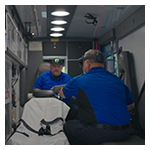
“We have spent the last 12 months developing training modules that depict potential war-time scenarios to enhance critical decision-making skills for our military. In a frantic and stressful environment such as the battlefield, experiential learning could help prevent medical errors and enhance mental readiness,” commented US Army Combat Veteran Physician and CEO of MedCognition, Dr. Kevin King. “Instead of classrooms or on-screen training modules, these modules empower military educators and trainees to practice caring for critically ill and injured soldiers in the actual environments where they deliver care.” Additionally, organizations are using PerSim for medical telesimulation during the COVID pandemic.
PerSim, an augmented reality medical simulation system, uses Microsoft HoloLens® mixed reality to project life-like holographic patients into actual environments. PerSim allows participants to view realistic patient simulations for a variety of clinical presentations. It is used by EMS educators, paramedic field training officers, medical simulation directors, and Emergency Medicine residency program directors to strengthen critical thinking, decision-making, and assessment skills of trainees.
In 2018, EMS World Magazine recognized PerSim as an Innovation of the Year. In 2019, MedCognition was awarded a phase 1 SBIR grant from the National Institutes of Health (NIH) for HAZMAT simulation training and a contract through AFWERX for developing critical care air transport (CCAT) simulation.
Founded in 2016, MedCognition was developed by Emergency Medicine clinicians, educators, and computer scientists through a partnership with UT Health San Antonio and UTSA. The mission of MedCognition is to help the frontline of healthcare save more lives by engaging in realistic medical simulations anytime, anywhere.
Contacts
Lisa Owens
LisaMMOwens@Gmail.com
210-601-6647