Pioneering Sustainability: Nissan LEAF Batteries Get a Second Life
Pioneering Sustainability: Nissan LEAF Batteries Get a Second Life
Repurposed EV batteries help power Nissan Americas Headquarters
- Battery Energy Storage Solution (BESS) project at Nissan Americas Headquarters in Franklin, Tennessee, uses LEAF batteries to offset building power consumption
- Nissan’s first second-life battery project in the U.S. studies EV battery reuse to optimize grid performance
- Expected to reduce CO2 emissions by 3.7 tons annually, minimizing waste and costs, contributing to Nissan’s 2050 carbon neutrality goals
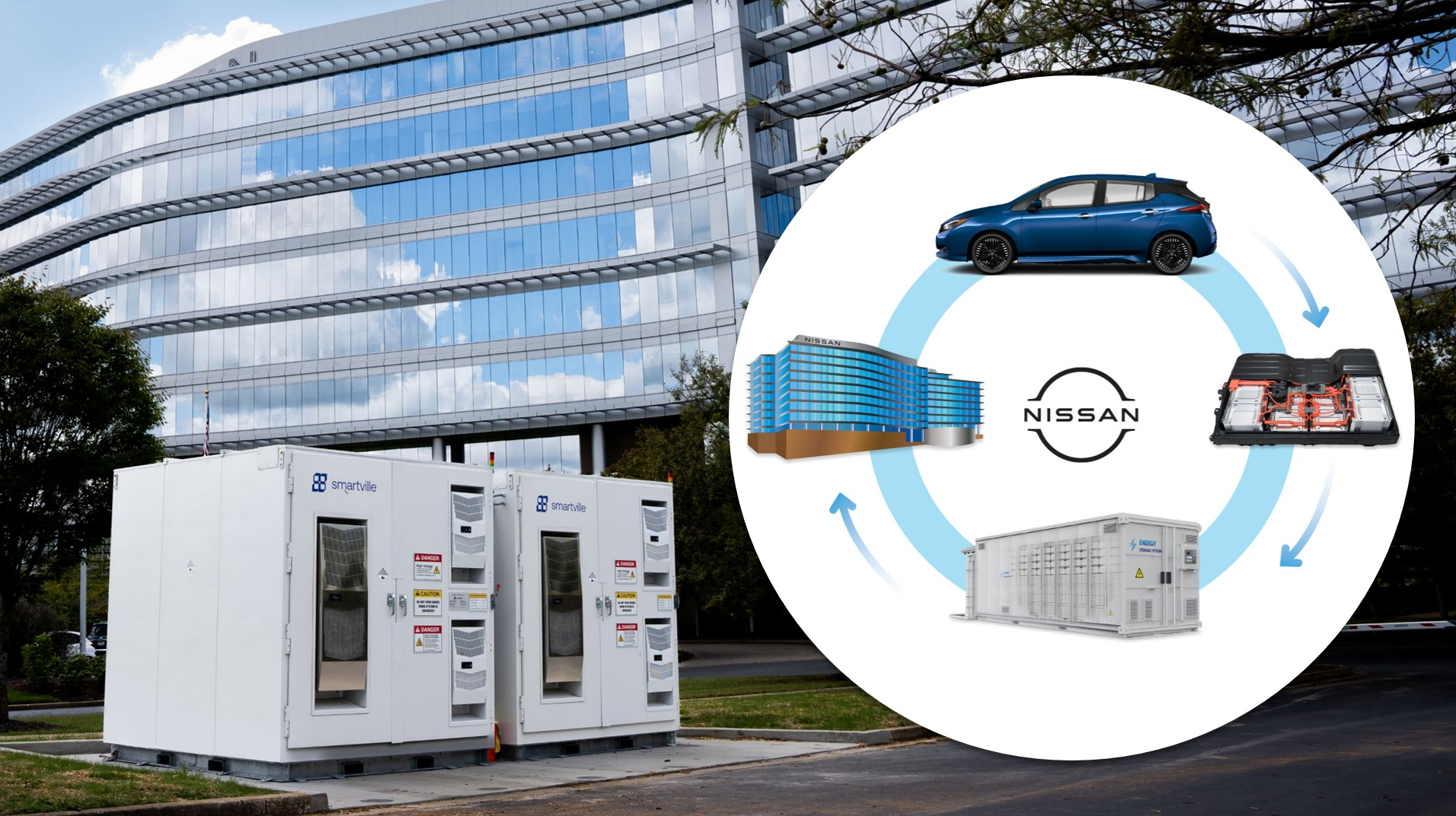
Nissan Americas Headquarters in Franklin, Tennessee, is adding two second-life battery systems to help offset building power consumption and extend the use of electric vehicle batteries. The project is a core part of Nissan’s sustainability goals, contributing to the company’s mission of maximizing the use of repurposed and recycled materials while minimizing the amount of waste generated. Managed in partnership with Middle Tennessee Electric, 7 States Power Corp., and the University of Tennessee-Oak Ridge Innovation Institute, the Battery Energy Storage Solution (BESS) project repurposes Nissan LEAF batteries to supply energy to the building during “peak demand” times and charge during “off-peak” times. (Photo: Business Wire)
FRANKLIN, Tenn.--(BUSINESS WIRE)--Nissan Americas Headquarters in Franklin, Tennessee, is adding two second-life battery systems to help offset building power consumption and extend the use of electric vehicle batteries. The project is a core part of Nissan’s sustainability goals, contributing to the company’s mission of maximizing the use of repurposed and recycled materials while minimizing the amount of waste generated.
Managed in partnership with Middle Tennessee Electric, 7 States Power Corp., and the University of Tennessee-Oak Ridge Innovation Institute, the Battery Energy Storage Solution (BESS) project repurposes Nissan LEAF batteries to supply energy to the building during “peak demand” times and charge during “off-peak” times.
The process, called “energy peak shaving,” is like storing rainwater after a downpour to use on your garden during a drought.
The project consists of two shipping container-like housings. One uses LEAF 40kWh packs and has a capacity of 500 kilowatt-hours (kWh), while the other uses LEAF modules and is rated for one megawatt-hour of energy capacity. In total, batteries from about 50-60 LEAF vehicles are used for the two assemblies.
These batteries come from within the Nissan network and are collected after a service replacement.
Variable needs, variable demands
Office buildings do not consistently use the same amount of electricity all day.
“Nissan Americas Headquarters typically sees two energy demand peaks, depending on the season,” explained Chris Goddard, regional energy and environmental manager at Nissan. “In winter, that’s first thing in the morning when employees arrive and the building’s electric heating is in high demand. In the summer, peak usage comes in late afternoon, when the air conditioning is cranked up to keep things cool.”
It’s at those times that the BESS project could supply stored power to complement what the building draws from the grid.
Overnight, surplus power makes it cheaper and greener to charge the batteries, reducing reliance on CO2-intensive generators during peak times.
While the Middle Tennessee region doesn’t have extremely high demand charges like other coastal regions in America, this project is testing the concept of turning demand reduction into dollars and carbon saved. As a result, the BESS project is expected to reduce the office’s annual carbon dioxide (CO2) emissions by 3.7 tons per year, contributing to global Nissan efforts to reduce emissions.
Additionally, in partnership with Middle Tennessee Electric, the team will investigate Demand Response (DR) program scenarios and opportunities.
Goddard said that what sets the Nissan project apart is the use of second-life battery packs and modules – rather than brand-new ones – that each have different states of health (SOH). A key part of the project involves balancing how all the batteries work together cohesively despite their different conditions and capacities.
“This project is about more than just technology — it’s about rethinking how we use resources to build a more sustainable future,” said Goddard. “We’re not just powering a building, we’re powering a vision of what’s possible.”
The two battery installations will be extensively studied at Nissan Americas Headquarters for at least a year as the team compiles data.
About Nissan USA Stories
The Nissan USA Stories page explores the best of Nissan’s people, products, technology and more. New to the page? Subscribe here to receive alerts when a new story is published.
Contacts
Media
Kevin Raftery
Manager, Nissan Storytelling & Content
Kevin.Raftery@nissan-usa.com