Recycling Is an Essential Component to Our Nation’s Supply Chain, but Most Consumers Aren’t Making That Connection
Recycling Is an Essential Component to Our Nation’s Supply Chain, but Most Consumers Aren’t Making That Connection
Research reveals consumers do not relate recycling to providing needed feedstock for new products
DENTON, Texas--(BUSINESS WIRE)--Immediately following the threat of shutdowns and the beginning of quarantines as a result of the coronavirus pandemic, consumers experienced shortages of paper products, such as toilet paper and paper towels. Despite the widespread shortages and attention they received, new research reveals that most consumers fail to make the connection between their recycling of paper at home and its value in providing feedstock to help make new products.
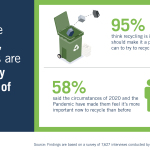
The good news is regardless, residents report they are keeping up their recycling during the pandemic. According to a national survey conducted last month by the Carton Council of North America, almost one-third of consumers (29%) report they have been recycling more during the pandemic and 56% have been recycling the same.
While promising, especially as the industry worked to maintain recycling programs when possible, the survey also revealed that consumers don’t understand the impact between recycling and the new products created. When asked how much impact recycling at home has on helping with paper shortages, 33% of consumers reported they thought recycling might have some impact on helping with the shortages, but they were not sure how much it really helped. While 18% felt recycling had no impact at all on alleviating shortages, 13% were unsure and had not thought about the connection.
“It’s great to see that people are either continuing to recycle at the same rate or recycling even more since spending increased time at home and generating more waste,” said Carla Fantoni, Vice President of Communications for the Carton Council of North America and for Tetra Pak Americas. “At the same time, the fact that consumers still aren’t seeing the connection between recycling and creating new products means that as an industry, there’s an opportunity to better educate about the important role it plays in our supply chain and building of a circular economy.”
Food and beverage cartons, made mainly of paper, are a recyclable material that provides needed feedstock for paper mills to create new paper products.
“Food and beverage cartons contain high quality fiber which we desire to help us keep up with demand for products like toilet paper, tissues, and paper towels,” said Michele Bartolini, Senior Marketing Director for Sustana. “As the nation opens up, we will continue to need paper feedstock to produce new paper materials. If cartons aren’t recycled and end up in a landfill, we are losing the opportunity to utilize that material.”
Nationwide, some recycling programs have had to temporarily stop or slow service due to the pandemic. Residents should check with their local municipality to confirm the overall status of their recycling program and if cartons are accepted where they live. To help improve awareness of recycling’s role in making new paper products, the Carton Council has launched a new digital campaign aimed at Midwestern states.
ABOUT THE CARTON COUNCIL
The Carton Council is composed of four leading carton manufacturers, Elopak, Evergreen Packaging, SIG Combibloc, and Tetra Pak. Formed in 2009, the Carton Council works to deliver long-term collaborative solutions in order to divert valuable cartons from the landfill. Through a united effort, the Carton Council is committed to building a sustainable infrastructure for carton recycling nationwide and works toward their continual goal of adding access to carton recycling throughout the U.S. For more information, visit CartonOpportunities.org.
ABOUT THE DIGITAL CAMPAIGN
The campaign is aimed at informing consumers of the valuable role they play in funneling a steady stream of recycled cartons to recyclers and manufacturers in this great time of need. The campaign will reach consumers and sustainability professionals with a steady stream of information across digital platforms, including Facebook, Instagram, Twitter and YouTube, to encourage them to #RecycleYourCartons and explain how cartons make the transformation into in demand paper products like toilet paper.
ABOUT FOOD AND BEVERAGE CARTONS
Food and beverage cartons are highly recyclable materials that come in two kinds: refrigerated cartons that store, milk, juice and egg substitutes; and shelf-stable cartons that are packaged for broths, milks, juices, soups and even wine. When sorted by themselves at materials recovery facilities (MRFs), cartons are a valuable material in high demand. Made mostly from paper, a renewable resource, cartons have become popular container choice for food and beverage products as they are lightweight and compact, with a low carbon footprint. When recycled, they are used to make office and writing paper, tissues, paper towels, and even sustainable building and construction materials. For more information about carton recycling, visit RecycleCartons.com.
Contacts
Sarah Kettenburg
(813) 760-4605