Arkenstone Defense Launches with $35M to Help Commercial Companies Enter the Federal Market
Arkenstone Defense Launches with $35M to Help Commercial Companies Enter the Federal Market
New platform gives technology companies a ready-made GovCon back office, eliminating years of operational setup.
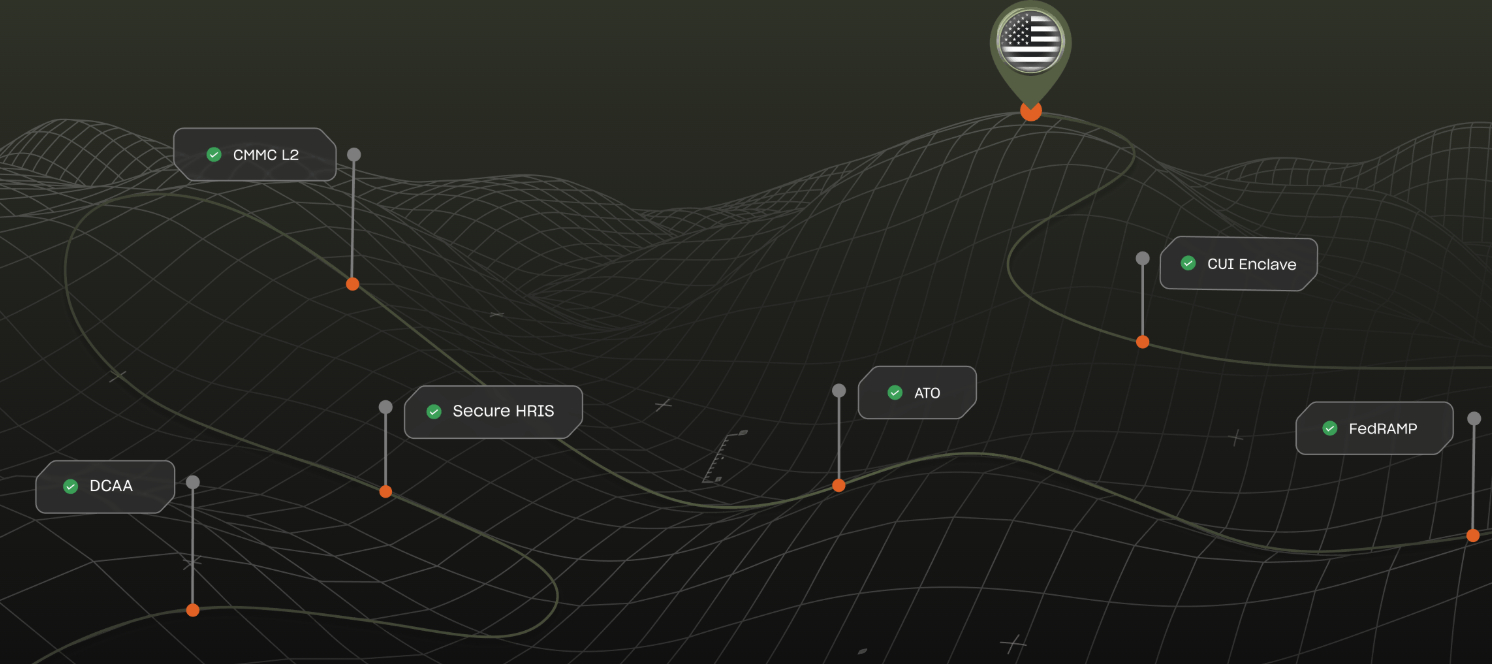
"The Pentagon has made it clear that it wants more commercial innovation," said Peter Dixon, co-founder and CEO of Arkenstone Defense. "The problem is that the procurement system wasn't built for venture-backed startups. Too many companies spend years building a government back office before they ever win a contract—or they give up entirely. We're changing that." Arkenstone combines workforce operations, HR, payroll, insurance, personnel security, contracting support, compliance, and accreditation into one managed platform that scales from a company's first federal opportunity through long-term government programs.
MENLO PARK, Calif.--(BUSINESS WIRE)--Arkenstone Defense emerged from stealth today with $35 million in seed funding to eliminate the compliance, security, workforce, and operational burden that keeps many commercial technology companies from selling to the U.S. government. The round was led by J2 Ventures, with participation from Susa Ventures, Granite Hill Capital Partners, and Artis Ventures.
"Our customers shouldn't have to become experts in government operations just to sell transformative technology. They should be focused on building products that strengthen national security. We handle everything required to make them operationally ready."
Share
America cannot rebuild the arsenal of freedom by relying solely on traditional defense contractors. Venture-backed startups and commercial technology companies now build the software, autonomy, AI, robotics, and advanced manufacturing capabilities the Pentagon needs at industrial scale. Yet government contracting still requires companies to build an entirely separate operational infrastructure before they can compete for federal work.
"The Pentagon has made it clear that it wants more commercial innovation," said Peter Dixon, co-founder and CEO of Arkenstone Defense. "The problem is that the procurement system wasn't built for venture-backed startups. Too many companies spend years building a government back office before they ever win a contract—or they give up entirely. We're changing that."
Arkenstone combines workforce operations, HR, payroll, insurance, personnel security, contracting support, compliance, and accreditation into one managed platform that scales from a company's first federal opportunity through long-term government programs.
Why it matters now
Pentagon acquisition spending has climbed to more than $300 billion annually, expanding the market for commercial technology companies.
For all that spending, the supplier base is getting smaller. The number of companies doing business with the Department of Defense fell from roughly 76,700 in 2017 to about 60,000 by 2021, according to the National Defense Industrial Association, and the roster of major prime contractors has consolidated from 51 in the 1990s to five today. Firms with real commercial businesses have nearly vanished from major programs, and defense specialists with little or no commercial work now account for 61 percent of major-program spending, up from 6 percent in 1989, per the Center for Strategic and International Studies.
The technology the country needs most increasingly lives in commercial companies that never make it through the door.
That barrier to the market is operational, not technical. Before a company can handle sensitive defense information, it must earn CMMC Level 2 certification, a process the Department of Defense estimates costs a small contractor nearly $490,000 over three years: industry first-cycle costs commonly run $75,000 to $300,000. In one survey of more than 2,000 contractors, 70 percent had budgeted under $100,000 — far below what certification actually takes. Fewer than 90 assessors are authorized nationwide to serve thousands of companies, and mandatory enforcement begins in November 2026.
CMMC is only one requirement among many: a cleared workforce, audited payroll, security programs, and an Authority to Operate all must come before the first contract.
Until now, founders have met these requirements by stitching together a patchwork of vendor solutions. Arkenstone replaces that fragmented model with a single GovCon-native operating platform.
"Our customers shouldn't have to become experts in government operations just to sell transformative technology," Dixon said. "They should be focused on building products that strengthen national security. We handle everything required to make them operationally ready."
How Arkenstone works
Arkenstone packages government contracting requirements into a single service a company can switch on, so its engineers can spend their time on their product instead of paperwork.
The company anchors its service in a Professional Employer Organization (PEO), the entity that legally employs the cleared workforce every contractor depends on. From there it layers in the pieces that travel with that workforce: payroll and benefits, labor and DCAA compliance, personnel and facility security, and the full accreditation lifecycle.
William Treseder, co-founder and Chief Operating Officer, has spent more than fifteen years helping bridge Silicon Valley and the Department of Defense through organizations including BMNT, Hacking for Defense, and the Marine Innovation Unit.
"I've watched incredible commercial technologies stall because companies couldn't navigate the operational burden of becoming government contractors," Treseder said. "We built Arkenstone for companies that have real capability and no clue how to win or deliver government contracts. Our job is to stand that up for them in months, not years. That's how the commercial sector becomes a real part of the defense industrial base."
More than two dozen defense technology companies already operate on Arkenstone's platform.
"During my time at the Defense Innovation Unit, I saw firsthand how often the government struggled to buy from commercial companies," said Alexander Harstrick, managing partner and co-founder of J2 Ventures. "The technology existed, but the operational infrastructure didn't. Arkenstone has built the missing layer that allows commercial innovation to move into the defense ecosystem at scale."
As global competition for advanced technologies accelerates, the United States must both modernize and expand its defense industrial base. By removing the operational barriers that keep commercial innovators out of government markets, Arkenstone aims to help more American innovation reach government customers faster, strengthening national security.
About Arkenstone Defense
Arkenstone Defense builds the operating system for government contracting and compliance — the infrastructure that lets commercial companies meet the full operating burden of selling to the U.S. government, from cleared workforce and payroll to personnel security, accreditation, and audit. By removing that burden, Arkenstone aims to widen the commercial defense industrial base and help the United States field capability affordably and at scale. Arkenstone is led by a team of operators who have built and run the GovCon, cybersecurity, and workforce businesses the company now brings together. It is based in Menlo Park, California, with offices in Albuquerque, New Mexico and Burr Ridge, Illinois. Learn more at arkenstonedefense.com.
*Forward-looking statements: This release contains forward-looking statements regarding Arkenstone Defense and its strategy that are subject to risks and uncertainties. Actual results may differ materially.*
Contacts
Lydia Davey Herter
ldavey.ctr@arkenstonedefense.com