Imperative Care Initiates ADAPT 2.0 Study Evaluating Advanced Clinical Technique Designed to Simplify Acute Ischemic Stroke Treatment
Imperative Care Initiates ADAPT 2.0 Study Evaluating Advanced Clinical Technique Designed to Simplify Acute Ischemic Stroke Treatment
First Patients Enrolled in Clinical Study of Streamlined Aspiration Thrombectomy Technique Using the Zoom Stroke System
CAMPBELL, Calif.--(BUSINESS WIRE)--Imperative Care, a medical technology company focused on advancing treatments for patients suffering from thromboembolic disease, today announced that initial patients have been enrolled in the ADAPT 2.0 Clinical Study, a prospective, multi-center, open-label, observational study evaluating the effectiveness, safety and clinical outcomes of the ADAPT 2.0 technique using the Zoom Stroke System to treat patients with acute ischemic stroke.
“This study is designed to further examine the potential clinical benefits of the ADAPT 2.0 technique, enabled by the Zoom Stroke System, to achieve reperfusion success, along with reduced time to final reperfusion – which are important indicators of long-term patient outcomes. Recent research found that procedure time may be a stronger predictor of clinical outcomes than first pass effect,”1 said David Fiorella, M.D., Ph.D., Clinical Professor of Neurological Surgery at Stony Brook Medicine. “Through this study, we aim to generate rigorous, real-world, independently adjudicated data on the effectiveness and safety of a systems approach in stroke care. Ultimately, our goal is to advance techniques and technologies that meaningfully improve care for patients affected by acute ischemic stroke.”
The ADAPT 2.0 Study (ClinicAl Evaluation of Continuous Dual AsPiraTion Technique With ZOom System for Str0ke) is expected to enroll up to 750 patients across up to 50 sites in the United States to evaluate first-line continuous dual-aspiration thrombectomy using the Zoom Stroke System. The study will assess both effectiveness and safety using established clinical endpoints, while following patients for 90 days post-procedure to better understand both procedural and longer-term outcomes. The primary efficacy endpoint is the proportion of patients achieving excellent reperfusion (mTICI≥2c) after treatment with the Zoom Stroke System, as adjudicated by an independent core-lab. The primary safety endpoint is the rate of Embolization to New Territory (ENT), or the movement of a blood clot or clot fragment from its original site of occlusion to a previously unaffected vascular territory.
“We believe the original ADAPT (A Direct Aspiration first Pass Technique) has become a first-line approach and standard of care for the treatment of acute ischemic stroke and has transformed thrombectomy by demonstrating the clinical value of direct aspiration. Building on findings of the Imperative Trial, this study is designed to evaluate the real-world performance of the ADAPT 2.0 technique, including procedural innovations intended to simplify thrombectomy workflows and support patient outcomes,” said Emir Deljkich, Senior Vice President of Clinical Affairs. “The ADAPT 2.0 technique is a system-driven approach that incorporates the delivery of a 0.088” intracranial catheter closer to the thrombus, aspiration via an asymmetric tip designed to facilitate more complete clot ingestion, and the consistent application of the continuous dual aspiration technique (CDAT).”
“We believe this study represents an important step in advancing ADAPT 2.0 as a first-line thrombectomy strategy and in generating rigorous, data-driven evidence to support ongoing innovation in stroke intervention. We look forward to seeing how this clinical technique may positively impact patient care — not only by enabling excellent reperfusion, faster procedure times and a simplified technique, but in potentially supporting improved patient outcomes in the months following intervention,” added Deljkich.
The study is co-led by national principal investigators David Fiorella, M.D., Stony Brook Medicine, Shahram Majidi, M.D., Icahn School of Medicine at Mount Sinai, Justin Mascitelli, M.D., UT Health San Antonio, Max Mokin, M.D., Ph.D., University of South Florida.
About the Zoom Products
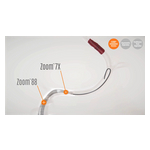
The Zoom System is designed to be a complete stroke system from access through reperfusion for fast and effective clot removal in patients presenting with acute ischemic stroke. Imperative Care’s Zoom System consists of the Zoom 35, 4S, 45, 55, 71 and 7X Catheters, Zoom 88 Large Distal Platform, Zoom 88 Support, Zoom POD and Zoom Aspiration/Zoom POD tubing, Zoom Canister and DuoPort Canister.
All Zoom Catheters are designed with an asymmetric tip, which has been shown to provide 15% greater clot engagement area at the tip of the catheter, relative to a traditional flat-tip catheter,2 and are constructed to enable smooth tracking through challenging vasculature. For complete product information, including indications, contraindications, warnings, precautions and adverse events, visit: https://bit.ly/3yWkfEJ.
About Imperative Care, Inc.
Imperative Care is a commercial-stage medical technology company focused on advancing treatments for patients suffering from thromboembolic disease, a serious medical condition caused by blood clot formation inside veins and arteries. Imperative Care was founded with the mission of bringing lifesaving treatments to patients suffering from ischemic stroke and other devastating vascular diseases caused by blood clot formation. The company’s commercially available product portfolio includes the Zoom Stroke System, the Symphony Thrombectomy System and the Prodigy Thrombectomy System. In addition to our commercial products, we are developing the Telos robotic platform*, an endovascular robotic system designed to bring greater precision and standardization to procedures and expand access to lifesaving treatment. Imperative Care is based in Campbell, Calif. https://imperativecare.com.
1. Agrawal A, Agrawal AS, Howell JL, et al. Is first-pass effect a meaningful metric to evaluate thrombectomy technologies?. Interv Neuroradiol. 2025; doi:10.1177/15910199251351167
2. Vargas J, Blalock J, Venkatraman A, et al. Efficacy of beveled tip aspiration catheter in mechanical thrombectomy for acute ischemic stroke. J Neurointerv Surg. 2021;13:823-826.
*Currently in development. Not approved for use or available for sale.
Dr. Fiorella, Dr. Majidi, Dr. Mascitelli and Dr. Mokin are paid consultants for Imperative Care.
Indications for Use:
The Zoom System, when used with the Zoom Aspiration Pump (or equivalent vacuum pump), is indicated for use in the revascularization of patients with acute ischemic stroke secondary to intracranial large vessel occlusive disease (within the internal carotid, middle cerebral – M1 and M2 segments, basilar, and vertebral arteries) within 8 hours of last known well. Patients who are ineligible for intravenous thrombolytic drug therapy or who have not responded to thrombolytic drug therapy are candidates for treatment.
Contacts
Media and Investor Contact:
Phil Nalbone
Imperative Care, Inc.
pnalbone@imperativecare.com