Hundreds of Carnegie Libraries to Receive $10,000 Gifts in Celebration of United States’ 250th Anniversary
Hundreds of Carnegie Libraries to Receive $10,000 Gifts in Celebration of United States’ 250th Anniversary
The foundation established in 1911 by Andrew Carnegie, Carnegie Corporation of New York, honors the country’s democratic ideals with $20 million in new funding to support America’s civic institutions
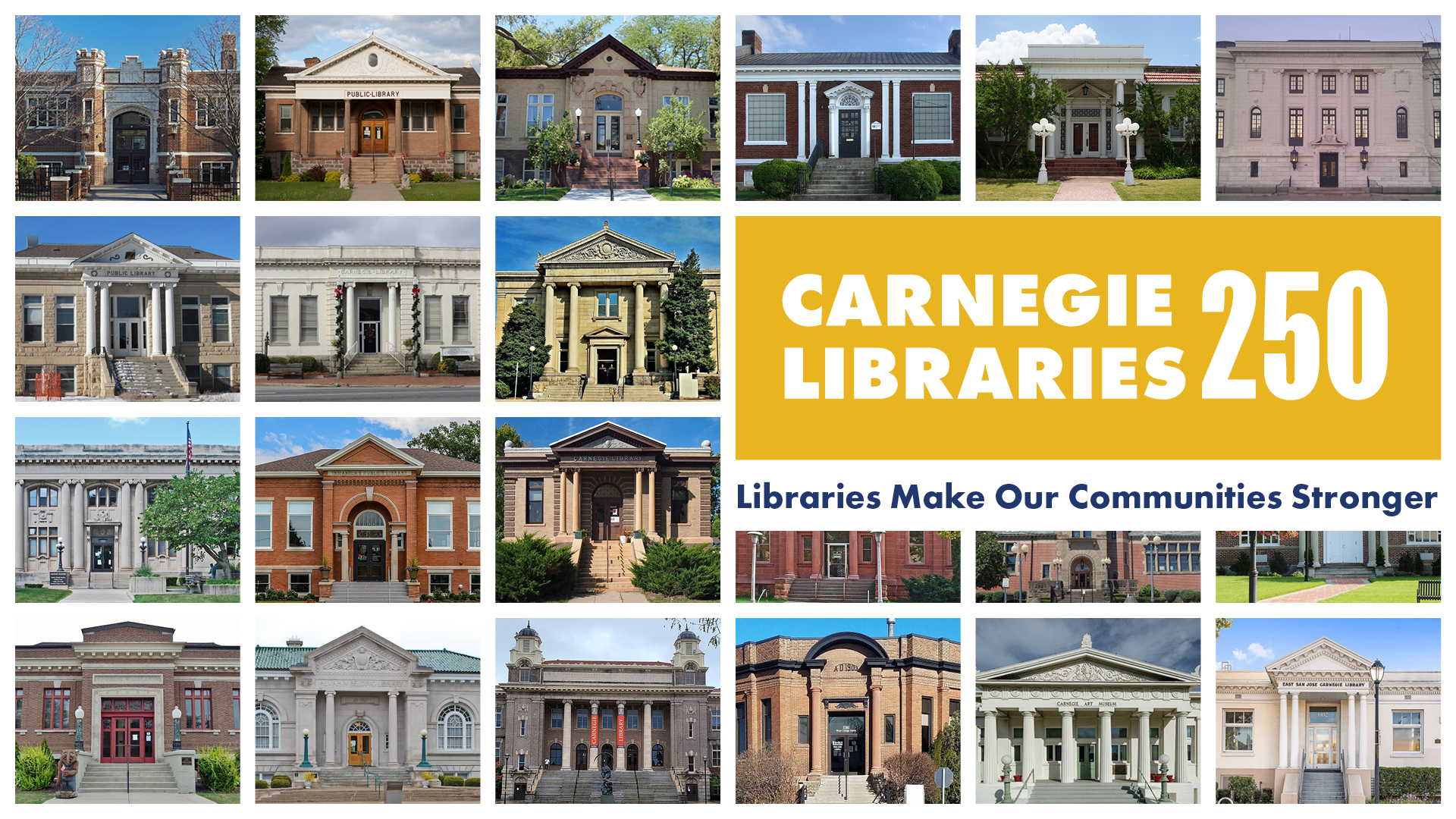
NEW YORK--(BUSINESS WIRE)--Carnegie Libraries across America will each receive a $10,000 gift to commemorate the 250th anniversary of the signing of the Declaration of Independence through a special initiative announced today by Carnegie Corporation of New York.
Carnegie Libraries across America will each receive a $10,000 gift to commemorate the 250th anniversary of the signing of the Declaration of Independence through a special initiative announced today by Carnegie Corporation of New York.
Share
Scottish immigrant Andrew Carnegie funded the construction of 1,681 free public libraries in the United States between 1886 and 1917. As part of the Carnegie Libraries 250 special initiative, his philanthropic foundation reached out to each library and established that about 1,280 still operate and acknowledge their link to Carnegie, making them eligible for the celebratory gift. Approximately 750 of them continue to use their original buildings while others have moved to new locations.
The gift recipients can expect to receive a check in January 2026. They may use the funds however they wish to celebrate the 250th, further their mission, and benefit their community.
“Our founder, Andrew Carnegie, who championed the free public library movement of the late 19th century, described libraries as ‘cradles of democracy’ that ‘strengthen the democratic idea, the equality of the citizen, and the royalty of man,’” said Dame Louise Richardson, president of Carnegie and former head of the University of Oxford. “We still believe this and are delighted to celebrate our connection to the libraries he founded.”
The $10,000 library gifts anchor a $20 million special initiative created to celebrate next year’s 250th anniversary by supporting America’s civic institutions and organizations that foster civic participation and bring people together.
These grants include exchange programs between people in urban and rural areas, cultural events that reach new audiences, and activities that engage the next generation of Americans. Among the grantees: Carnegie Hall, the Gilder Lehrman Institute of American History, the Jack Miller Center for Teaching America’s Founding Principles and History, the Museum of the City of New York, The New York Historical, Yo-Yo Ma’s Silkroad, and the Smithsonian Institution.
The special initiative aligns with the foundation’s overarching goal of reducing political polarization. Over the past year, Carnegie has invested $30 million in grants for civics education, state-based community service, youth voting, and media and digital literacy. Related grants include $13 million to libraries for programs such as English language learning for adults and civic participation for teens. Carnegie also makes annual grants of $6 million to fund the Andrew Carnegie Fellows Program and scholarly research about the causes and potential solutions of polarization.
Carnegie Libraries and their patrons are encouraged to showcase their libraries and gifts by submitting photographs and stories for possible inclusion on carnegielibraries.org, Carnegie’s new website featuring user-generated content. The site is part of Carnegie Libraries Across America, an interactive resource that enables visitors to locate libraries, explore archival documents and correspondence collected by the foundation, and learn about the origins of each building.
Readers can learn more about Andrew Carnegie’s library legacy in a timeline detailing how the philanthropist changed the library landscape in America and a video sharing his vision of providing free access to learning and opportunity for all. Library lovers are invited to join Carnegie’s community by signing up for the foundation’s Unstacked newsletter to stay informed about ongoing funding opportunities.
About Carnegie Corporation of New York
Carnegie Corporation of New York was established by Andrew Carnegie in 1911 to promote the advancement and diffusion of knowledge and understanding. Today the foundation works to reduce political polarization through philanthropic support for the issues that Carnegie considered most important: education, democracy, and peace.
Contacts
For further information: Angely Montilla | aem@carnegie.org | 347.360.7803