Newsroom
Sorted by: Latest
-
アジーナス、IGCS 2026にて再発卵巣がんに対するボテンシリマブ+バルスチリマブ併用療法の3年生存率推定値48%を報告
米マサチューセッツ州レキシントン--(BUSINESS WIRE)--(ビジネスワイヤ) -- 免疫腫瘍学分野におけるイノベーションのリーダーであるアジーナス (Nasdaq:AGEN)は、400名以上の患者を対象とした第1b相臨床試験C-800-01の卵巣がんコホートにおける3年間の追跡調査結果を発表しました。当該試験では、アジーナスの多機能性Fc強化型抗CTLA-4抗体であるボテンシリマブ(BOT)と、同社の抗PD-1抗体であるバルスチリマブ(BAL)の併用療法が評価されました。3年生存率、白金製剤に対する感受性別および既往治療別の転帰を含む結果は、カナダ・モントリオールで開催された2026年国際婦人科がん学会(IGCS)年次総会で発表されました。 有効性評価対象患者における3年全生存率は48%(n=35)で、2年生存率の推定値と変化はなく、この集団における持続的な臨床的ベネフィットを示唆しています。白金製剤感受性および白金製剤耐性または難治性の両疾患において、奏効および長期生存が認められました。最終追跡調査時点で少なくとも1回の治療を受けた患者の25%(44例中11例)が生存し...

-
Riassunto: Agenus segnala una sopravvivenza a tre anni stimata al 48% con BOT+BAL nel tumore ovarico recidivante all'IGCS 2026
LEXINGTON, Mass.--(BUSINESS WIRE)--Agenus Inc. (Nasdaq: AGEN), un leader nell'innovazione immuno-oncologica, oggi ha annunciato i risultati del follow-up a tre anni forniti dalla coorte del carcinoma ovarico del suo studio clinico di Fase 1b C-800-01 che ha coinvolto più di 400 pazienti. Lo studio ha valutato botensilimab (BOT), l'anticorpo anti-CTLA-4 multifunzionale, potenziato con Fc di Agenus, in associazione con balstilimab (BAL), l'anticorpo anti-PD-1 di Agenus. Il testo originale del pre...

-
Agenus informa una supervivencia estimada a tres años del 48 % con BOT+BAL para cáncer de ovarios recurrente en IGCS 2026
LEXINGTON, Massachusetts--(BUSINESS WIRE)--Agenus Inc. (Nasdaq: AGEN), líder en innovación en inmunooncología, anunció hoy los resultados del seguimiento a tres años de la cohorte de cáncer de ovarios de su ensayo C-800-01 de fase 1b, en el que participaron más de 400 pacientes. El estudio evaluó a botensilimab (BOT), el anticuerpo anti-CTLA-4 multifuncional con región Fc potenciada de Agenus, en combinación con balstilimab (BAL), el anticuerpo anti-PD-1 de Agenus. Los resultados, incluida la s...

-
Agenus在IGCS 2026上公布的数据显示,BOT+BAL联合疗法治疗复发性卵巢癌的预计3年总生存率达到48%
马萨诸塞州列克星敦--(BUSINESS WIRE)--(美国商业资讯)-- 免疫肿瘤学创新领域的领军企业Agenus Inc. (Nasdaq: AGEN)今日公布了其Ib期C-800-01临床试验中卵巢癌队列的3年随访结果,该研究共纳入400余名患者。该试验旨在评估Agenus自主研发的多功能、Fc增强型抗CTLA-4抗体botensilimab(BOT)联合抗PD-1抗体balstilimab(BAL)的疗效与安全性。包含3年生存率以及按铂类化疗敏感性与既往治疗分类的最新疗效数据,已于在加拿大蒙特利尔举行的2026年国际妇科肿瘤学会(IGCS)全球年会上正式公布。 在可评估疗效的患者中,三年总生存率为48%(n=35),与两年估计值持平,表明该群体可获得持久的临床获益。无论在铂敏感型还是铂耐药或难治性疾病患者中,均观察到了疗效反应和长期生存。在最后一次随访时,接受过至少一剂治疗的患者中有25%(44例中的11例)仍存活且未接受任何治疗。 这些结果来自一个既往接受过大量治疗的患者群体。患者既往接受的治疗中位数为四线,其中66%的患者接受过至少四线治疗。所有患者均曾接受过铂类化疗,7...

-
Agenus divulga sobrevida estimada de 48% em três anos com BOT+BAL no câncer de ovário recorrente no IGCS 2026
LEXINGTON, Massachusetts--(BUSINESS WIRE)--A Agenus Inc. (Nasdaq: AGEN), empresa líder em inovação em imuno-oncologia, anunciou hoje os resultados do acompanhamento de três anos da coorte de câncer de ovário do estudo de Fase 1b C-800-01, que contou com a participação de mais de 400 pacientes. O estudo avaliou o botensilimabe (BOT), anticorpo anti-CTLA-4 multifuncional com Fc aprimorado, em combinação com o balstilimabe (BAL), anticorpo anti-PD-1, ambos da Agenus. Os resultados, incluindo a sob...

-
Samenvatting: Agenus rapporteert een geschatte driejarige overleving van 48% met BOT+BAL bij recidiverende eierstokkanker tijdens IGCS 2026
LEXINGTON, Mass.--(BUSINESS WIRE)--Agenus Inc. (Nasdaq: AGEN), een toonaangevende speler op het gebied van innovatie in immuno-oncologie, heeft vandaag de resultaten bekendgemaakt van de driejarige follow-up van het cohort met eierstokkankerpatiënten uit zijn fase 1b-studie C-800-01, waaraan meer dan 400 patiënten deelnamen. In het onderzoek werd botensilimab (BOT), het multifunctionele, Fc-versterkte anti-CTLA-4-antilichaam van Agenus, geëvalueerd in combinatie met balstilimab (BAL), het anti-...

-
Agenus annonce à l'IGCS 2026 une survie à trois ans estimée à 48 % avec BOT+BAL dans le cancer de l'ovaire récurrent
LEXINGTON, Massachusetts--(BUSINESS WIRE)--Agenus Inc. (Nasdaq : AGEN), un acteur de premier plan de l'innovation en immuno-oncologie, annonce ce jour les résultats du suivi à trois ans de la cohorte cancer de l'ovaire de son essai de phase 1b C-800-01, mené auprès de plus de 400 patientes. L'étude a évalué le botensilimab (BOT), l'anticorps anti-CTLA-4 multifonctionnel à Fc renforcé d'Agenus, en association avec le balstilimab (BAL), l'anticorps anti-PD-1 d'Agenus. Les résultats, incluant la s...

-
Agenus meldet auf der IGCS 2026 eine geschätzte Dreijahresüberlebensrate von 48 % mit BOT+BAL bei rezidivierendem Eierstockkrebs
LEXINGTON, Massachusetts--(BUSINESS WIRE)--Agenus Inc. (Nasdaq: AGEN), ein führendes Unternehmen im Bereich der immunonkologischen Innovation, gab heute die Ergebnisse der Dreijahres-Nachbeobachtung der Eierstockkrebs-Kohorte aus seiner Phase-1b-Studie C-800-01 mit über 400 Patientinnen bekannt. Die Studie untersuchte Botensilimab (BOT), den multifunktionalen, Fc-verstärkten Anti-CTLA-4-Antikörper von Agenus, in Kombination mit Balstilimab (BAL), dem Anti-PD-1-Antikörper von Agenus. Die Ergebni...

-
Genmab Announces Rinatabart Sesutecan (Rina-S®) Phase 2 RAINFOL™-01 Results Demonstrated Durable and Clinically Meaningful Responses in Patients with Platinum-Resistant Ovarian Cancer
COPENHAGEN, Denmark--(BUSINESS WIRE)--Genmab A/S (Nasdaq: GMAB) today announced results from Part C of the Phase 1/2 RAINFOL™-01 trial evaluating rinatabart sesutecan (Rina-S), an investigational folate receptor alpha (FRα)-targeted, topoisomerase I (TOPO1)-inhibitor antibody-drug conjugate (ADC), demonstrated that among 109 treated patients with platinum-resistant ovarian cancer (PROC), Rina-S achieved a confirmed objective response rate (ORR) of 45.9% (95% CI: 36.3–55.7), including five compl...

-
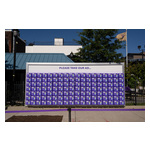
Luvs Is Helping Parents With Affordable Diapers That Actually Work
CINCINNATI--(BUSINESS WIRE)--Luvs is bringing an interactive diaper giveaway to Jersey City on Saturday, October 3, as part of its commitment to providing high-quality diapers at an affordable price. From 12–6 p.m. at Mary McLeod Bethune Park, Luvs is asking parents to “Please Take Our Ad” – an interactive billboard constructed of free diaper packs local families can take1. As the packs are removed, the billboard will gradually reveal the message: “Leak protection shouldn’t be a luxury.” “For 5...