Newsroom
Sorted by: Latest
-
Altera Launches QuartusIQ, An AI Expert Companion for Quartus Prime Software
SAN JOSE, Calif.--(BUSINESS WIRE)--Altera Corporation, the largest pure-play FPGA provider with a full-spectrum portfolio, today introduced QuartusIQ, an AI expert companion for Quartus Prime Pro software designed to accelerate the complete FPGA development flow. QuartusIQ helps FPGA developers apply expert guidance and repeatable workflows within Quartus Prime, enabling users to create, debug and validate designs more efficiently, resolve issues with greater confidence and move from design int...

-
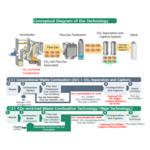
Kanadevia Completes World’s First Technology Demonstration Plant in the Waste to Energy Sector to Advance Decarbonization
OSAKA, Japan--(BUSINESS WIRE)--Kanadevia will demonstrate the world’s first Waste to Energy technology that enriches CO₂ in flue gas for efficient capture and carbon recycling....
-
Reply Introduces Reply Immersive Experience: a Space Where Artificial Intelligence and Immersive Technologies Bring Multisensory Brand Experiences to Life
TURIN, Italy--(BUSINESS WIRE)--Reply [EXM, STAR: REY] introduces Reply Immersive Experience, a multisensory smart room that combines artificial intelligence and immersive technologies to create environments where audiences can explore products, interact with digital scenarios and take part in stories that unfold in the space around them. Images, sound, lighting and settings transform in real time, adapting to the experience and audience interactions. Reply Immersive Experience enables brands to...

-
Riassunto: NIQ annuncia i vincitori del 2026 Western Europe NIQ BASES Breakthrough Innovation Award
LONDRA--(BUSINESS WIRE)--NielsenIQ (NYSE: NIQ), un leader globale nella consumer intelligence, oggi ha annunciato i vincitori dei suoi 2026 Western Europe NIQ BASES Breakthrough Innovation Awards, i riconoscimenti dei prodotti innovativi che hanno avuto maggiore successo e impatto commerciale, lanciati nel Regno Unito, in Francia, Germania, Italia e Spagna. Attualmente nella edizione annuale per l'Europa occidentale, i NIQ BASES Breakthrough Innovation Awards premiano i prodotti che hanno dimos...

-
NIQ Announces 2026 Western Europe NIQ BASES Breakthrough Innovation Award Winners
LONDON--(BUSINESS WIRE)--NielsenIQ (NYSE: NIQ), a global leader in consumer intelligence, today announced the winners of its 2026 Western Europe NIQ BASES Breakthrough Innovation Awards, recognizing the most successful and commercially impactful product innovations launched across Great Britain, France, Germany, Italy, and Spain. Now in its annual Western Europe edition, the NIQ BASES Breakthrough Innovation Awards celebrate products that have demonstrated exceptional market performance, sustai...

-
Samenvatting: NIQ maakt winnaars bekend van NIQ BASES Breakthrough Innovation Awards 2026 voor West-Europa
LONDEN--(BUSINESS WIRE)--NielsenIQ (NYSE: NIQ), wereldwijd marktleider op het gebied van consumenteninzichten, heeft vandaag de winnaars bekendgemaakt van de NIQ BASES Breakthrough Innovation Awards 2026 voor West-Europa. Deze prijzen erkennen de meest succesvolle en commercieel impactvolle productinnovaties die zijn gelanceerd in Groot-Brittannië, Frankrijk, Duitsland, Italië en Spanje. De NIQ BASES Breakthrough Innovation Awards, nu voor de jaarlijkse editie van West-Europa, bekronen producte...

-
Reply presenta Reply Immersive Experience: uno spazio dove intelligenza artificiale e tecnologie immersive danno vita ad esperienze di brand multisensoriali
TORINO, Italia--(BUSINESS WIRE)--Reply [EXM, STAR: REY] presenta Reply Immersive Experience, una smart room multisensoriale che unisce l’intelligenza artificiale e tecnologie immersive per creare ambienti in cui esplorare prodotti, interagire con scenari digitali e partecipare a racconti che prendono forma nello spazio circostante. Immagini, suoni, luci e ambientazioni si trasformano in real time, adattandosi all’esperienza e alle interazioni del pubblico. Reply Immersive Experience consente ai...

-
Alter Domus Appoints André Bourbonnais as Non-Executive Chair
LUXEMBOURG--(BUSINESS WIRE)--Alter Domus, a leading global provider of fund administration and asset servicing solutions across private markets, today announces the appointment of André Bourbonnais as Non-Executive Chair of its Board of Directors. André brings an exceptional depth of experience in private markets and financial services, spanning a distinguished career across some of the world's most prominent investment institutions. Previously, André was a Managing Director at BlackRock and Ch...
-
Reply présente Reply Immersive Experience : un espace où l’intelligence artificielle et les technologies immersives donnent vie à des expériences de marque multisensorielles
TURIN, Italie--(BUSINESS WIRE)--Reply [EXM, STAR: REY] présente Reply Immersive Experience, un espace immersif multisensoriel qui associe intelligence artificielle et technologies immersives pour créer des environnements dans lesquels le public peut découvrir des produits, interagir avec des univers numériques et prendre part à des histoires qui se déploient autour de lui. Images, sons, lumières et décors évoluent en temps réel, en s’adaptant à l’expérience et aux interactions des participants....

-
NIQ gibt die Gewinner der 2026 Western Europe NIQ BASES Breakthrough Innovation Awards bekannt
LONDON--(BUSINESS WIRE)--NielsenIQ (NYSE: NIQ), ein weltweit führendes Unternehmen im Bereich Verbraucherforschung, gab heute die Gewinner seiner 2026 Western Europe NIQ BASES Breakthrough Innovation Awards bekannt, mit denen die erfolgreichsten und wirtschaftlich einflussreichsten Produktinnovationen ausgezeichnet werden, die in Großbritannien, Frankreich, Deutschland, Italien und Spanien auf den Markt gebracht wurden. Die NIQ BASES Breakthrough Innovation Awards, die nun in ihrer jährlichen W...