Newsroom
Sorted by: Latest
-
Bureau Veritas Confirms LEAP | 28 Ambition, Upgrades Total Revenue Growth to Double-Digit in 2027 – 20281 and Targets EUR1 Billion Revenue in AI-Driven Markets and Services by 2030
COURBEVOIE, France--(BUSINESS WIRE)--Bureau Veritas (BOURSE:BVI): CAPITAL MARKETS DAY 2026 Today, Bureau Veritas hosts its Capital Markets Day. The Company will present an update on the progress of its LEAP | 28 strategy, building on three years of successful execution. › 2024-2026 achievements: Proven track record: mid-to-high single-digit organic revenue growth (7-8%) delivered across 2023–2026e2, with 115 basis points of adjusted operating margin improvement3; Portfolio transformation on tra...

-
Bureau Veritas confirme son ambition LEAP | 28, relève son objectif de croissance totale du chiffre d'affaires à deux chiffres pour 2027-20281 et vise 1 milliard d'euros de chiffre d'affaires dans les marchés et services liés à...
COURBEVOIE, France--(BUSINESS WIRE)-- Bureau Veritas confirme son ambition LEAP | 28, relève son objectif de croissance totale du chiffre d'affaires à deux chiffres pour 2027-20281 et vise 1 milliard d'euros de chiffre d'affaires dans les marchés et services liés à l'intelligence artificielle d'ici 2030 Bureau Veritas (BOURSE:BVI): JOURNÉE INVESTISSEURS 2026 Bureau Veritas organise aujourd'hui sa Journée Investisseurs. Le Groupe présentera un point d'étape sur l'exécution de sa stratégie LEAP...

-
Genentech Announces Positive Phase II Results for Dual GLP-1/GIP Receptor Agonist Enicepatide in People Living With Type 2 Diabetes and Overweight or Obesity
SOUTH SAN FRANCISCO, Calif.--(BUSINESS WIRE)--Genentech, a member of the Roche Group (SIX: RO, ROP; OTCQX: RHHBY), today announced positive topline results from CT-388-104, a Phase II clinical trial evaluating enicepatide (CT-388), an investigational, once-weekly dual GLP-1/GIP receptor agonist, in adults living with type 2 diabetes (T2D) and overweight or obesity. In the study, enicepatide met both primary endpoints, delivering dose-dependent and clinically meaningful reductions in blood gluco...

-
CTP N.V. Capital Markets Day Showcases Record Leasing and Self-funded Expansion Model
WARSAW, Poland--(BUSINESS WIRE)--Regulatory News: CTP N.V. ("CTP", the "Group" or the "Company"), Europe's largest listed owner, developer and manager of logistics and industrial real estate by gross lettable area, today hosts its 2026 Capital Markets Day in Warsaw, Poland, followed by asset tours on 23 September 2026. During the Capital Markets Day, management will provide an update on CTP's growth strategy, operational performance and long-term ambitions, highlighting the strength of the Grou...

-
Omdia: Mainland China PC market grows 11% in Q2, shipments forecast to fall 6% in 2026
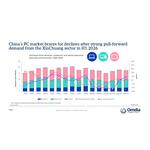
LONDON--(BUSINESS WIRE)--Mainland China’s PC shipments grew 11% year-over-year (YoY) in 2Q26 to 11.4 million units, according to the latest Omdia data. Desktop shipments surged 42%, offsetting a 2% decline in notebook shipments, with the two categories accounting for 4.3 million and 7.1 million units, respectively. Meanwhile, tablet shipments in mainland China declined 13% to 8.0 million units, amid weaker demand and ongoing supply challenges. Omdia’s latest forecast projects mainland China’s P...
-
On Enters Next Chapter: Unveils Strategy to Redefine What a Sportswear Brand Can Be Alongside 2029 Financial Targets
ZURICH--(BUSINESS WIRE)--On Enters Next Chapter: Unveils Strategy to Redefine What a Sportswear Brand Can Be Alongside 2029 Financial Targets...

-
H2SITE Secures €3.4 Million (NOK 39.1 million) in Enova Funding to Scale Onboard Ammonia-To-Power for Commercial Maritime Applications
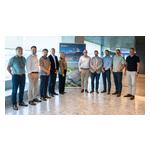
BILBAO, Spain & BERGEN, Norway--(BUSINESS WIRE)--H2SITE has secured €3.4 million (NOK 39.1 million) in funding from Enova for HydraNord Power, a project that will develop and validate a commercial-scale onboard ammonia-to-power system for the maritime sector. Enova is one of the Norwegian government's primary instruments for accelerating the country's climate and energy transition. Its primary responsibility is to manage the Climate and Energy Fund on behalf of the Norwegian government. For H2S...
-
洛杉矶儿童医院荣获《美国新闻与世界报道》与《新闻周刊》颁发的全美及全球顶级儿科医院荣誉
洛杉矶讯--(BUSINESS WIRE)--(美国商业资讯)-- 洛杉矶儿童医院(CHLA)斩获来自《美国新闻与世界报道》与《新闻周刊》的全国及全球顶级儿科医院荣誉。CHLA 再度入选《美国新闻与世界报道》2026–2027 年度最佳儿童医院榜单,跻身全美 10 大儿科医院之列。本院连续第 18 年入选该刊最佳儿童医院荣誉榜,自该榜单创立起,洛杉矶儿童医院便一直保有这项荣誉。在国际榜单方面,CHLA 入选全球顶尖儿科医院,于《新闻周刊》2027 年度全球最佳专科医院榜单的儿科类别中位列第 5 名。 CHLA 总裁兼首席执行官 Paul S. Viviano 表示:"这份荣誉,彰显了本院医生、护士、科研人员以及众多其他团队成员为推动儿科医学发展所付出的非凡奉献。"“125 年来,洛杉矶儿童医院始终融合世界级诊疗服务、突破性研究与深切人文关怀,改善患者及其家属的生活。能够获评全美及全球顶尖儿童医院,印证了我们这份坚守的力量 - 对我们团队而言,儿童永远站第一位。” 《美国新闻与世界报道》全美排名儿科专科 在《美国新闻与世界报道》2026–2027 年度最佳儿童医院专科排名中,洛杉矶儿童医...

-
Rippling Opens AI Lab in Bengaluru to Accelerate the Future of AI-Powered Business Software
BENGALURU, India--(BUSINESS WIRE)--Rippling, the AI-native workforce management company, launched the Rippling AI Lab, a research and engineering group dedicated to continuous AI innovation. The AI Lab is based at Rippling's Embassy Tech Village campus in Bengaluru, the company's largest engineering hub outside its San Francisco headquarters. The AI Lab team develops core components of Rippling's AI platform, including infrastructure, evaluation frameworks, sandboxing, scaling, latency optimiza...

-
Rosen Law Firm Urges Ardelyx, Inc. (NASDAQ: ARDX) Stockholders with Large Losses to Contact the Firm for Information About Their Rights
NEW YORK--(BUSINESS WIRE)--Rosen Law Firm, a global investor rights law firm, announces a class action lawsuit on behalf of purchasers of common stock of Ardelyx, Inc. (NASDAQ: ARDX) between January 13, 2025 and August 6, 2026, inclusive (the “Class Period”). Ardelyx develops and commercializes medicines.For more information, submit a form, email attorney Phillip Kim, or give us a call at 866-767-3653.The Allegations: Rosen Law Firm is Investigating the Allegations that Ardelyx, Inc. (NASDAQ: AR...