Newsroom
Sorted by: Latest
-
Computershare Trustees (Jersey) Limited UK Regulatory Announcement: Form 8.3
LONDON--(BUSINESS WIRE)-- FORM 8.3 PUBLIC OPENING POSITION DISCLOSURE/DEALING DISCLOSURE BY A PERSON WITH INTERESTS IN RELEVANT SECURITIES REPRESENTING 1% OR MORE Rule 8.3 of the Takeover Code (the “Code”) 1. KEY INFORMATION (a) Full name of discloser: Computershare Trustees (Jersey) Limited as trustee of the Schroders Employee Benefit Trust (b) Owner or controller of interests and short positions disclosed, if different from 1(a): The naming of nominee or vehicle companies is insufficient. Fo...
-
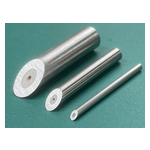
NIPPON KINZOKU’s “FINE PIPE” Series Welded Drawn Pipes Outperforming Seamless Pipes
TOKYO--(BUSINESS WIRE)--NIPPON KINZOKU CO., LTD. (TOKYO:5491) (Headquarters: Minato-ku, Tokyo) has commercialized its “FINE PIPE” series *1, -welded drawn pipes that outperform traditional seamless pipes. By leveraging its unique expertise as a material manufacturer and proprietary processing technologies (welding, drawing, and annealing), the company delivers high-quality, eco-friendly, and cost-effective solutions. FINE PIPE is already widely adopted across various sectors, including automoti...
-
Northern Trust Asset Management Launches Sustainable Multifactor Funds
LONDON--(BUSINESS WIRE)--Northern Trust Asset Management, a leading global investment manager with US$1.4 trillion in assets under management (as of March 31, 2026), today announced the launch of two actively managed UCITS funds, designed to pursue outperformance while efficiently managing climate transition-related risks and opportunities. The NT World Multifactor Focus Select Fund seeks excess returns over a full market cycle, while the NT World Multifactor Select Fund strategy aims to delive...

-
Overture Life and Tekservis Partner, Deploying Automated Egg and Embryo Freezing Across Turkey's Fertility Clinics
PALO ALTO, Calif. & ANKARA, Turkey--(BUSINESS WIRE)--Overture Life, a leading developer of automated IVF technologies and the first company to achieve live births from both robotic fertilization and robotic egg freezing, today announced a nationwide commercial partnership with Tekservis to deploy its DaVitri automated egg and embryo freezing platform across fertility clinics in Turkey. The rollout marks one of the first large-scale implementations of IVF automation at a national level and provi...

-
Wolters Kluwer launches a3innuva Nómina Expert AI in Spain, introducing an intelligent agent embedded in payroll software
BARCELONA, Spain--(BUSINESS WIRE)--Wolters Kluwer launches a3innuva Nómina Expert AI in Spain, introducing an intelligent agent embedded in payroll software...

-
Wolters Kluwer lanza a3innuva Nómina Expert AI en España, con un agente inteligente integrado en su software
BARCELONA, España--(BUSINESS WIRE)--Wolters Kluwer Tax & Accounting España, proveedor líder de soluciones de software, información y servicios para despachos profesionales y empresas, ha anunciado hoy el lanzamiento de a3innuva Nómina Expert AI. La última evolución de su solución de nóminas basada en la nube introduce un agente inteligente diseñado para ayudar a los profesionales del ámbito laboral a optimizar procesos, acceder rápidamente a información fiable y mejorar la toma de decisione...

-
Omdia Appoints Theresa Lanowitz as Principal Analyst for Vulnerability and Risk Management
LONDON--(BUSINESS WIRE)--Omdia has appointed Theresa Lanowitz as Principal Analyst covering vulnerability and risk management within its Cybersecurity go-to-market research practice, bringing decades of experience in software development, industry analysis, and cybersecurity leadership to the role. Lanowitz joins Omdia from LevelBlue, the AT&T cybersecurity spinoff, where she served as Chief Evangelist, leading strategic marketing, communications, public relations, content, and industry out...

-
Comrade Trustee Services goes live with Smartstream’s Air, the AI reconciliation and data automation solution
LONDON--(BUSINESS WIRE)--Comrade Trustee Services goes live with Smartstream’s Air, the AI reconciliation and data automation solution...
-
Parse Biosciences推出新一代免疫分析试剂盒
西雅图--(BUSINESS WIRE)--(美国商业资讯)-- 可扩展且易于获取的单细胞测序解决方案的领先提供商Parse Biosciences今日宣布推出新一代Evercode™ TCR和Evercode™ BCR试剂盒,并已开始向全球客户发货。这些升级版试剂盒提供了简化的工作流、更优的全转录组测序文库效率以及更佳的性能表现,使研究人员能够解析稀有克隆型别,并以前所未有的规模分析免疫反应。 免疫学研究人员致力于理解复杂的适应性免疫反应,但有意义的信号往往稀少、短暂,或者在样本有限的大规模研究中难以捕获。Parse的免疫分析产品组合将大规模、高灵敏度和固定优先的工作流与成对的TCR或BCR及全转录组分析相结合,帮助研究人员在高通量免疫学研究中将克隆身份与细胞状态联系起来。 Evercode TCR和Evercode BCR现在都基于相同的v4化学体系构建,该体系也驱动着最新的Evercode全转录组产品,从而将免疫组库研究和转录组学研究统一到单一工作流中。Evercode BCR v4从同一细胞中捕获B细胞受体和全转录组数据,具有改进的配对CDR3检测灵敏度和全长重链与轻链回收能力...

-
Parse Biosciences lança a próxima geração dos seus kits de perfil imunológico
SEATTLE--(BUSINESS WIRE)--A Parse Biosciences, principal provedora de soluções escalonáveis e acessíveis de sequenciamento de células únicas, lançou hoje a próxima geração dos seus kits Evercode™ TCR e Evercode™ BCR, com remessas para clientes no mundo todo. Os kits atualizados entregam um fluxo de trabalho aperfeiçoado, melhor eficiência da biblioteca de sequenciamento de transcriptoma completo e melhor desempenho, permitindo que os pesquisadores resolvam clonótipos raros e determinem o perfil...