Newsroom
Sorted by: Latest
-
ENHERTU® (fam-trastuzumab deruxtecan-nxki) demonstrated a median progression-free survival of 14.3 months as 1st-line therapy in patients with HER2-mutant advanced non-small cell lung cancer in DESTINY-Lung04 Phase III trial
WILMINGTON, Del.--(BUSINESS WIRE)--Positive results from the DESTINY-Lung04 Phase III trial showed AstraZeneca and Daiichi Sankyo’s ENHERTU® (fam-trastuzumab deruxtecan-nxki) demonstrated a statistically significant and clinically meaningful improvement in progression-free survival (PFS) versus global standard of care (platinum-pemetrexed doublet chemotherapy plus pembrolizumab) as a 1st-line treatment of patients with unresectable, locally advanced or metastatic HER2-mutant non-squamous non-sm...

-
TAGRISSO® (osimertinib) demonstrated unprecedented eight-year landmark survival in early-stage EGFR-mutated lung cancer in ADAURA Phase III trial
WILMINGTON, Del.--(BUSINESS WIRE)--Updated exploratory results from the ADAURA Phase III trial showed AstraZeneca’s TAGRISSO® (osimertinib) demonstrated a sustained, clinically meaningful overall survival (OS) benefit at eight years compared to placebo in the adjuvant treatment of patients with early-stage (IB, II and IIIA) epidermal growth factor receptor-mutated (EGFRm) non-small cell lung cancer (NSCLC) after complete tumor resection with curative intent. These results were presented today d...

-
Enhertu® Demonstrated a Median Progression-Free Survival of 14.3 Months as First-Line Therapy in Patients with HER2 Mutant Advanced Non-Small Cell Lung Cancer in DESTINY-Lung04 Phase 3 Trial
TOKYO--(BUSINESS WIRE)--Enhertu Demonstrated a Median 14.3 Month Progression-Free Survival as First-Line Therapy in Patients with HER2 Mutant Advanced NSCLC in DESTINY-Lung04...

-
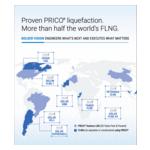
Black & Veatch celebrates more than fifteen years of FLNG innovation, engineering experience and advancement of PRICO liquefaction performance at Gastech 2026
BANGKOK--(BUSINESS WIRE)--Black & Veatch marks more than fifteen years of working in floating LNG (FLNG) this year at Gastech 2026, showcasing dramatic liquefaction performance increases and the launch of the company’s LNG-focused infrastructure intelligence toolset, BVInfraIQ.LNG. These advancements form the basis for the company’s new Advanced Liquefaction Architecture (ALA). ALA encompasses more than 60 years of LNG experience and more than fifteen years of offshore experience achieving...
-
Zipalertinib Plus Chemotherapy Demonstrates 6-Month Median Progression-Free Survival Benefit in REZILIENT3 Phase 3 Trial in First-Line EGFR Exon 20 Insertion Mutation Non-Small Cell Lung Cancer
PRINCETON, N.J. & TOKYO & CAMBRIDGE, Mass.--(BUSINESS WIRE)--Taiho Oncology, Inc., Taiho Pharmaceutical Co., Ltd., and Cullinan Therapeutics, Inc. (Nasdaq: CGEM) today announced results from the Phase 3 REZILIENT3 trial evaluating zipalertinib plus chemotherapy versus chemotherapy alone in the first-line treatment of patients with epidermal growth factor receptor (EGFR) exon 20 insertion (ex20ins) mutation-positive non-small cell lung cancer (NSCLC). The data were presented at the International...

-
Corgan Expands Aviation Practice in Asia Pacific with Ben Dawson Hire
SINGAPORE--(BUSINESS WIRE)--Global architecture and design firm Corgan is pleased to announce that Ben Dawson has joined the firm as Aviation & Transportation Studio Leader in its Singapore office. In this role, Dawson will grow Corgan’s presence in the Asia-Pacific region and advise clients as they envision, design and deliver transformative airport environments that enhance passenger experience, operational efficiency, and provide for long-term growth. “Airports in this part of the world...

-
Faraday Future Founder and Global CEO YT Jia Shares Weekly Investor Update: Previews the Upcoming 9/19 Event; Highlights FF’s EAI Robotics' Autonomous Perception and 3D Scanning Technology; Adds a New Senior Advisor Focused on Govt. Procurement
LOS ANGELES--(BUSINESS WIRE)--Faraday Future Intelligent Electric Inc. (NASDAQ: FFAI) (“Faraday Future”, “FF” or the “Company”), a California-based global Embodied AI (EAI) ecosystem company, today shared a weekly business update from YT Jia, Founder and Global CEO of FF.“Hello, everyone. Welcome to Issue 72 of our Weekly Report. Our annual 9/19 event is almost here. On September 19 at 5:00 p.m. Pacific Time, we will hold the FF EAI Robotics "Four-Core Full-Stack AI" Ecosystem New Product Series...

-
Definium Therapeutics to Discuss Topline Results from Phase 3 Panorama Study in Generalized Anxiety Disorder on September 14, 2026
NEW YORK--(BUSINESS WIRE)--Definium Therapeutics, Inc. (“Definium” or the “Company”), a late-stage clinical biopharmaceutical company developing a new generation of therapeutics intended to address underlying causes of psychiatric and neurological disorders, today announced that it will host a live webcast tomorrow at 8 a.m. EDT to discuss topline results from Panorama, the Company’s second Phase 3 study of DT120 (lysergide) Orally Disintegrating Tablet (ODT) in adults with generalized anxiety...

-
SES’s Final Three O3b mPOWER Satellites Successfully Launched
LUXEMBOURG--(BUSINESS WIRE)--SES today announced the successful launch of its eleventh, twelfth and thirteenth O3b mPOWER satellites, further expanding its second-generation medium Earth orbit (MEO) system designed to offer high-performance connectivity services around the world. The three satellites launched at 2:49 pm local time aboard a SpaceX Falcon 9 rocket from Space Launch Complex 40 (SLC-40) at Cape Canaveral Space Force Station. “This launch marks a defining milestone for SES as we com...

-
Wild Alaskan Company - Hits Shelves with Nationwide Target Launch
HOMER, Alaska--(BUSINESS WIRE)--Wild Alaskan Company announces nationwide Target partnership, bringing wild-caught seafood to shoppers....