Newsroom
Sorted by: Latest
-
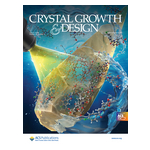
Samenvatting: Nieuwe polymorf van indomethacine ontdekt
TOKIO--(BUSINESS WIRE)--Rigaku Corporation, een wereldwijde partner voor oplossingen op het gebied van röntgenanalysesystemen en een dochteronderneming van Rigaku Holdings Corporation (hoofdkantoor: Akishima, Tokio; CEO: Jun Kawakami; "Rigaku"), kondigt aan dat de resultaten van een gezamenlijk onderzoeksproject met Shionogi & Co., Ltd., JEOL Ltd. en de Meiji Pharmaceutical University zijn gepubliceerd in Crystal Growth & Design, een wereldwijd gerenommeerd internationaal tijdschrift op...
-
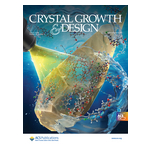
Riassunto: Scoperto un nuovo polimorfo dell'indometacina
TOKYO--(BUSINESS WIRE)--Rigaku Corporation, un partner globale di soluzioni nei sistemi analitici dei raggi X e un'azienda del gruppo Rigaku Holdings Corporation (sede centrale: Akishima, Tokyo; CEO: Jun Kawakami; “Rigaku”), ha annunciato che i risultati di un progetto di ricerca congiunta condotta con Shionogi & Co., Ltd., JEOL Ltd., e Meiji Pharmaceutical University sono stati pubblicati in Crystal Growth & Design, una rivista internazionale di cristallografia di fama mondiale. Questa...
-
Le modèle de bioéconomie axé sur l'impact d'AFYREN confirmé par la certification B Corp™
CLERMONT-FERRAND, France & LYON, France--(BUSINESS WIRE)--Regulatory News: AFYREN (Paris:ALAFY), une greentech qui propose aux industriels des ingrédients biosourcés et à faible empreinte carbone grâce à une technologie de fermentation unique reposant sur un modèle circulaire, annonce aujourd’hui avoir obtenu la certification B CorpTM au niveau du groupe, marquant ainsi une étape majeure dans son parcours vers le développement durable. Développée par B Lab, la certification B CorpTM est une nor...
-
AFYREN’s Impact-Driven Bioeconomy Model Confirmed by B Corp™ Certification
CLERMONT-FERRAND, France & LYON, France--(BUSINESS WIRE)--Regulatory News: AFYREN (Paris:ALAFY), a greentech company offering manufacturers biobased, low-carbon ingredients through a unique fermentation technology based on a circular model, today announces that it has achieved B CorpTM certification at group level, marking a major milestone on the company’s sustainability journey. Developed by B Lab, B CorpTM certification is a globally recognized standard that assesses a company’s social, envi...
-
Metrica Partners Publishes Open Letter to the Board of WUS Printed Circuit Co., Ltd. (TWSE: 2316) After Company Fails to Respond to Shareholder Engagement
SINGAPORE--(BUSINESS WIRE)--Metrica Partners asks WUS to address an ~80% discount to NAV, capital-allocation and investor-communication practices ahead of the 12 June 2026 AGM...

-
Sensorion franchit des étapes réglementaires clés pour SENS-601 dans la perte auditive liée au gène GJB2 et sélectionne ce programme comme principal candidat-médicament en thérapie génique
MONTPELLIER, France & CAMBRIDGE, Mass.--(BUSINESS WIRE)--Regulatory News: Sensorion (FR0012596468 – ALSEN), Société pionnière de biotechnologie au stade clinique, spécialisée dans le développement de nouvelles thérapies pour restaurer, traiter et prévenir les troubles de la perte auditive, annonce aujourd’hui la sélection de SENS-601, qui cible la perte auditive liée au gène GJB2, comme principal programme. Une demande d’autorisation d’essai clinique a été déposée au Canada et en France afin d’...
-
Sensorion Achieves Key Regulatory Milestones for SENS-601 for GJB2-related Hearing Loss and Selects Program as Lead Gene Therapy Candidate
MONTPELLIER, France & CAMBRIDGE, Mass.--(BUSINESS WIRE)--Regulatory News: Sensorion (FR0012596468 – ALSEN) a pioneering clinical-stage biotechnology company specializing in the development of novel therapies to restore, treat and prevent hearing loss disorders, today announced the selection of SENS-601 which addresses GJB2-related hearing loss as its lead program. A Clinical trial application has been filed in Canada and France to evaluate the safety, tolerability and efficacy of intra-cochlear...
-
Colwood municipal workers deliver strong strike mandate
COLWOOD--(BUSINESS WIRE)--Municipal workers in Colwood, represented by CUPE 374, have voted 92 per cent in favour of strike action. "This result sends a clear message that workers believe the employer needs to take a different approach. We hope the City and Council will take this opportunity to find common ground and work with us to negotiate a fair agreement that supports both workers and the services residents rely on,” says CUPE 374 President Shireen Clark. The central outstanding issue is t...

-
Zoho Corporation Unveils Nathu La, a Designed-in-House Server, in a Move Towards Technological Sovereignty and Inference Cost Reduction
AUSTIN, Texas--(BUSINESS WIRE)--Zoho Corporation, a global technology company and parent company of Zoho and ManageEngine, today announced the launch of Nathu La, a designed in-house server and a pivotal step in the company's journey toward building its full technology stack, from the hardware layer to the software applications. With Nathu La, Zoho has achieved equivalent performance with 12-18% lower power consumption and 20-30% lower total cost of ownership (TCO), and in turn, bringing down i...

-
Mitsubishi Electric Awarded Subsidy to Develop Flexible Space Mobility Technology under JAXA’s Space Strategy Fund
TOKYO--(BUSINESS WIRE)--Mitsubishi Electric Corporation (TOKYO: 6503) announced today that it has been awarded a subsidy for the Development of Inter-Orbit Transportation Vehicles (OTVs) under the Technology for Realizing Flexible Mobility in Space program, which is being financed by the 2nd Phase of the Space Strategy Fund managed by the Japan Aerospace Exploration Agency (JAXA). The company was previously selected as a representative organization for the project and will develop OTVs in that...