Newsroom
Sorted by: Latest
-
锚定AI时代能源需求新趋势 道通科技在悉尼发布电网协同与车队充电方案
悉尼--(BUSINESS WIRE)--(美国商业资讯)-- 当地时间 6 月 9 日,道通科技于悉尼举办 “赋能未来——2026 数字能源战略暨新品发布会”。 伴随 AI 产业的高速发展,全球电网承载压力持续攀升,市场对于高效智能、稳定可靠和易扩展的能源解决方案需求愈发迫切。 会上,道通面向澳大利亚市场首发占地面积小、业内领先的无功补偿直流充电解决方案、高可靠、长寿命的全液冷直流充电解决方案、深度融合储能、光伏与充电桩的iGreen光储充一站式解决方案和AC充电解决方案,以及专为车队定制的“1+1 主备切换”充电解决方案。同时,道通结合本土市场实际运营案例,深度拆解澳洲全域智能充电网络商业化运营逻辑与成熟盈利模式,精准贴合当地市场发展需求。 发布会开场,道通科技董事长李红京 (Frank) 以视频形式发表开场致辞,向所有出席发布会的朋友与行业领袖致以谢意,并表示愿与各方携手,共同推进未来更智能、更互联、更可持续的充电基础设施建设。 随后,道通科技首席特别顾问 Mosen Wang、亚太区首席执行官 Henry He 先后登台分享。Henry He 复盘品牌 2025 年整体经营业绩...

-
Resumen: El ISO/TC 251 reconoce a Ampowr como el único operador de sistemas de almacenamiento de energía por batería (BESS) con una pila ISO totalmente integrada
ÁMSTERDAM, Países Bajos--(BUSINESS WIRE)--El ISO/TC 251, el comité técnico internacional responsable de la elaboración de la serie de estándares ISO 55000 sobre gestión de activos, ha publicado un estudio de caso en el que se describe la metodología de certificación integrada de Ampowr. El estudio, elaborado por NEN, el organismo nacional de normalización de los Países Bajos, ya está disponible públicamente en la biblioteca de estudios de caso del ISO/TC 251, junto con los perfiles de Rijkswate...
-
Riassunto: ISO/TC 251 riconosce Ampowr come l'unico operatore BESS con uno stack ISO totalmente integrato
AMSTERDAM, Paesi Bassi--(BUSINESS WIRE)--ISO/TC 251, la commissione tecnica internazionale che prepara la serie di norme ISO 55000 per la gestione degli asset, ha pubblicato un caso di studio profilando la metodologia della certificazione integrata di Ampowr. Preparata da NEN, l'ente olandese di normazione, lo studio è attualmente disponibile al pubblico nella libreria dei casi studio ISO/TC 251, assieme ai profili di Rijkswaterstaat, US Army Corps of Engineers, Novo Nordisk e Veolia. Il testo...
-
E3 Lithium Executes Contribution Agreement Underpinning up to $36.5 million in Federal Support to Accelerate Clearwater Project
CALGARY, Alberta--(BUSINESS WIRE)--E3 LITHIUM LTD. (TSXV: ETL) (FSE: OW3) (OTCQX: EEMMF), “E3”, “E3 Lithium” or the “Company,” a leader in Canadian lithium development, announces that all conditions associated with the previously announced federal government funding have now been met. The Company has executed the contribution agreement confirming up to $36,507,091 of non-repayable funding through Natural Resources Canada (NRCan)’s Global Partnerships Initiative (“GPI”) (the “Funding”), to accel...
-
Captivate Your Audience with the New Logitech Spotlight 2 Advanced Presenter, Featuring Haptics and Digital Highlighting
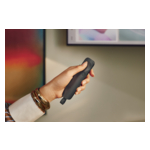
SAN JOSE, Calif. & LAUSANNE, Switzerland--(BUSINESS WIRE)--Logitech (SIX: LOGN) (NASDAQ: LOGI) today announced Spotlight 2, a premium advanced presenter designed to keep audiences fully engaged. Raising expectations in the presenters category, the device moves beyond simple control to deliver a first-of-its-kind guided breathing experience alongside an intuitive, force-sensitive highlighting button with subtle haptic feedback. Engineered to build confidence before a speaker even steps on stage,...
-
Logitech Launches Mobi Fold, Its First Ultra-Portable Foldable Mouse for Life On the Go
SAN JOSE, Calif. & LAUSANNE, Switzerland--(BUSINESS WIRE)--Logitech (SIX: LOGN) (NASDAQ: LOGI) today solved a major pain point for traveling professionals with the introduction of Mobi Fold and Mobi Fold for Business. As Logitech’s first foldable mouse, Mobi Fold is engineered to allow users to reclaim their full productivity potential with comfort, whether they are in an airport lounge, a bustling cafe, or a hotel lobby. For the modern professional, work is no longer anchored to a desk, it hap...

-
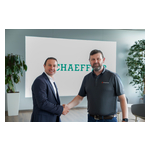
Schaeffler and Sonatus Bring Edge AI to Motion Control for Software-Defined Vehicles
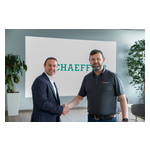
HERZOGENAURACH, Germany & SUNNYVALE, Calif.--(BUSINESS WIRE)--Schaeffler and Sonatus partner to embed Edge AI in SDV control units, enabling smarter vehicles, faster development, and continuous updates....
-
Smead Capital Management Extends International Value Strategy to Global Investors Through New Fund
PHOENIX--(BUSINESS WIRE)--Smead Capital Management, a Phoenix-based investment management firm and a leader in value investing, today announced the launch of the Smead Global ex-US Value UCITS Fund designed to provide global investors with access to a product modeled after the firm’s long-standing Smead International Value Strategy. The Smead Global ex-US Value UCITS Fund is domiciled in Luxembourg. Investors can access the fund through Smead Capital Management’s website and it is available to...

-
Roquette Showcases Scalable Drug Delivery Innovations at CPHI China 2026
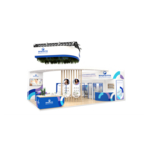
SHANGHAI--(BUSINESS WIRE)--Roquette, a global leader in plant-based ingredients and pharmaceutical excipients, will showcase its comprehensive portfolio of innovative drug delivery solutions at CPHI & PMEC China 2026, taking place June 16-18 at the Shanghai New International Expo Centre (SNIEC). Under the theme “One Roquette for Innovations,” Roquette’s Health & Pharma Solutions Business Unit will exhibit at booth E3D26, highlighting how its deep scientific expertise and technical capab...
-
Schaeffler und Sonatus bringen KI-Algorithmen auf Steuergeräte für softwaredefinierte Fahrzeuge
Herzogenaurach, Deutschland und Sunnyvale, Kalifornien--(BUSINESS WIRE)--Schaeffler und Sonatus bringen Edge-KI in SDV-Steuergeräte, um Entwicklung zu beschleunigen und Fahrzeuge kontinuierlich zu verbessern....