

Newsroom
Sorted by: Latest
-
Kautex Secures New Business Award for Pentatonic Battery Enclosure Solution
BONN, Germany--(BUSINESS WIRE)--Kautex has secured a new business award for its Pentatonic battery enclosure solution....

-
KAUTEX GEWINNT NEUEN AUFTRAG FÜR PENTATONIC BATTERIEGEHÄUSE
BONN, Deutschland--(BUSINESS WIRE)--Kautex Textron GmbH & Co. KG (Kautex), ein Unternehmen der Textron Inc. (NYSE: TXT), hat einen neuen Auftrag für sein Pentatonic-Batteriegehäuse gewonnen und stärkt damit seine Position im wachsenden Marktsegment elektrifizierter Pkw weiter. Das Programm für einen führenden Automobil-OEM umfasst das gesamte Batteriegehäuse – bestehend aus Deckel und Unterschale inklusive eines Thermomanagementsystems – entwickelt für eine Fahrzeugplattform und ausgelegt,...

-
Tikehau Capital: Extension of the Share Repurchase Mandate
PARIS--(BUSINESS WIRE)--Regulatory News: Tikehau Capital (Paris:TKO), a global alternative asset manager, announces it has extended the share repurchase mandate signed and announced on 19 March 2020 until 26 February 2027 (inclusive). The size of this mandate is increased, from this day, from €175 million to €190 million. As a reminder, this mandate granted to an investment services provider is carried out within the limits set by the nineteenth resolution adopted by the General Meeting of 30 A...
-
Tikehau Capital : Prolongation du mandat de rachat d’actions
PARIS--(BUSINESS WIRE)--Regulatory News: Tikehau Capital (Paris:TKO), groupe mondial de gestion d’actifs alternatifs, annonce avoir prolongé ce jour le mandat de rachat signé et annoncé le 19 mars 2020 jusqu’au 26 février 2027 (inclus). La taille de ce mandat est portée, à compter de ce jour, de 175 millions d’euros à 190 millions d’euros. Pour rappel, ce mandat confié à un prestataire de services d’investissement est réalisé dans les limites imposées par la dix-neuvième résolution adoptée par...
-
Pacific Defense Successfully Launches Moonraker Payload on Avalon Mission, Advancing Open Architecture in Space
EL SEGUNDO, Calif.--(BUSINESS WIRE)--Pacific Defense today announced the successful launch and initial on-orbit performance of its Moonraker payload on the Avalon Mission, marking a key step in advancing open, reprogrammable, software-defined capabilities in space. Launched on March 30, 2026, Avalon represents the first on-orbit demonstration of Moonraker, a mission-flexible radio frequency (RF) payload designed for space situational awareness (SSA) and electromagnetic spectrum operations (EMSO...

-
Schneider’s VR training and advanced simulators enhance safety for Bulk shipping, earning a national award
GREEN BAY, Wis.--(BUSINESS WIRE)--Schneider National, Inc. (NYSE: SNDR), a premier multimodal provider of transportation, intermodal and logistics services, is reinforcing safety and preparedness by integrating state-of-the-art truck driving simulators and immersive virtual reality (VR) into Bulk and Over-the-Road driver training programs. The company's innovative approach, which leverages driving simulators and VR technology to safely immerse and train Bulk drivers on real-world scenarios, was...

-
H55 Delivers Certification-Grade Propulsion Battery Modules to Pratt & Whitney Canada, Supporting Demonstration of Hybrid-Electric Aircraft Technology
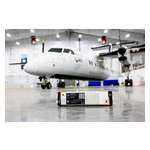
SION, Switzerland & MONTREAL--(BUSINESS WIRE)--H55 today announced the delivery of certification-grade propulsion battery modules to Pratt & Whitney Canada in support of the RTX Hybrid-Electric Flight Demonstrator — a milestone that further validates H55’s transition from technology development to industrial-scale execution and represents an important step in the commercialization of the company’s certification-grade energy storage technologies for hybrid-electric aerospace applications. Pr...
-
H55 livre à Pratt & Whitney Canada des modules de batterie de propulsion certifiables, soutenant la démonstration de la technologie hybride-électrique pour l’aviation
SION, Suisse and MONTREAL--(BUSINESS WIRE)--H55 a annoncé aujourd’hui la livraison de modules de batteries de propulsion conformes aux exigences de certification à Pratt & Whitney Canada dans le cadre du projet RTX de démonstrateur de vol hybride-électrique. Cette étape décisive confirme la transition de H55 du développement technologique à la mise en œuvre à l’échelle industrielle et représente une avancée majeure dans la commercialisation des technologies de stockage d’énergie certifiable...

-
Arlow Launches to Redefine Caregiving: From Crisis Response to Everyday Support
DALLAS--(BUSINESS WIRE)--Caregiving doesn’t come with a plan. For millions of families, it unfolds in real time, layering new responsibilities, decisions and emotions onto everyday life, often without the tools or support to navigate it with clarity. Arlow was created to change that. Today, the company is pleased to announce the public launch of its caregiving platform, offering a more proactive, coordinated way for older adults and their families to move through the aging journey with greater...

-
Xtrackers II UK Regulatory Announcement: Net Asset Value(s)
LONDON--(BUSINESS WIRE)-- Xtrackers II Investment company with variable capital (Société d'investissement à capital variable) Registered office: 49, avenue J.F. Kennedy, L-1855 Luxembourg R.C.S. Luxembourg B-124.284 (the “Company”) NOTICE TO SHAREHOLDERS OF THE SUB-FUNDS LISTED ON THE LONDON STOCK EXCHANGE Luxembourg, 08 June 2026 The board of directors of the Company (the “Board of Directors”) hereby informs all shareholders of the sub-funds listed in the table below (each a “Sub-Fund”, and t...