Newsroom
Sorted by: Latest
-
First Trust Global Funds PLC UK Regulatory Announcement: Net Asset Value(s)
LONDON--(BUSINESS WIRE)-- Funds Date TIDM ISIN Code Shares in Issue Currency Net Asset Value NAV/per Share First Trust Indxx Global Aerospace & Defence UCITS ETF 08.06.2026 MISL.LN IE000NVDQXE1 4,075,002.00 USD 136,644,987.64 33.533 ...
-
First Trust Global Funds PLC UK Regulatory Announcement: Net Asset Value(s)
LONDON--(BUSINESS WIRE)-- Funds Date TIDM ISIN Code Shares in Issue Currency Net Asset Value NAV/per Share First Trust Vest Nasdaq-100 Moderate Buffer UCITS ETF - September 08.06.2026 QSEP.LN IE000FQ808R5 400,002.00 USD 9,760,841.87 24.402 ...
-
Novanta Inc. Announces $300 Million Private Placement
BOSTON--(BUSINESS WIRE)--Novanta Inc. ("Novanta" or the “Company”) announced today that it has entered into a securities purchase agreement for a private placement of the Company’s common shares (“Common Shares”) to institutional and other accredited investors that is expected to result in gross proceeds of approximately $300 million to the Company, before placement agent fees and offering expenses. Pursuant to the terms of the securities purchase agreement, the investors agreed to purchase an...
-
First Trust Global Funds PLC UK Regulatory Announcement: Net Asset Value(s)
LONDON--(BUSINESS WIRE)-- Funds Date TIDM ISIN Code Shares in Issue Currency Net Asset Value NAV/per Share First Trust Vest U.S. Equity Moderate Buffer UCITS ETF - May 08.06.2026 GMAY.LN IE000P0FL8E3 1,100,002.00 USD 43,599,181.89 39.636 ...
-
Token Announces Leading Biometric Assured Identity Protection for Salesforce Access
ROCHESTER, N.Y.--(BUSINESS WIRE)--Token, a leader in biometric assured identity, today announced that its TokenCore Wearable and TokenCore Portable products provide Salesforce customers, Salesforce partners, and Salesforce administrators with one of the strongest available methods for meeting and exceeding Salesforce phishing resistant access requirements. Salesforce has made clear that the security landscape has changed. AI driven phishing, vishing, social engineering, credential theft, and ac...

-
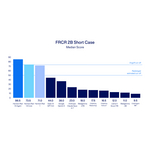
Harrison.ai Releases Harrison.Rad 1.5, a Radiology Foundation Model That Can Draft Reports from Images, Priors and Clinical Context and the Only Model to Pass Radiology's New Board-exam Standard
BOSTON--(BUSINESS WIRE)--Harrison.ai releases Harrison.Rad 1.5, a radiology foundation model that can draft reports from images, priors and clinical context....
-
Carnegie Corporation of New York Changes Its Name to the Andrew Carnegie Foundation
NEW YORK--(BUSINESS WIRE)--Carnegie Corporation of New York announced today that it has changed its name to the Andrew Carnegie Foundation....

-
NinjaOne Reaches $12.3B Valuation as IT Operations Market Consolidates Around a Single Platform
AUSTIN, Texas--(BUSINESS WIRE)--NinjaOne®, unifying IT to simplify work, today announced a $12.3 billion valuation following more than $400 million in Series C extensions. The extensions included participation from Wellington Management, Teachers’ Venture Growth (TVG), BDT & MSD Partners’ affiliated funds, Sequoia Capital, ICONIQ, Hedosophia, NEA, Washington Harbour Partners, CapitalG, and Pinegrove Opportunity Partners. The announcement follows a landmark 2025 for NinjaOne that delivered n...
-
Pursuit Reveals Hotel Whitefish, the Next Chapter of Grouse Mountain Lodge
WHITEFISH, Mont.--(BUSINESS WIRE)--Pursuit Reveals Hotel Whitefish, the Next Chapter of Grouse Mountain Lodge...

-
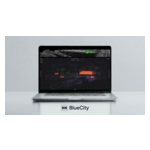
Ouster Completes New Jersey DOT Deployment of Ouster BlueCity Ahead of 2026 FIFA World Cup
SAN FRANCISCO--(BUSINESS WIRE)--Ouster, Inc. (Nasdaq: OUST) (“Ouster” or the “Company”), a leader in sensing and perception for Physical AI, announced today the completed deployment of Ouster BlueCity at over 40 locations across highways surrounding MetLife Stadium in the lead up to the 2026 FIFA World Cup. The installations follow a 2025 New Jersey Department of Transportation (NJDOT) contract awarded to Ouster and its distribution partner, Signal Control Products, to deploy Ouster BlueCity to...